Historic Green: Sustainable skill-building from New Orleans to Missouri

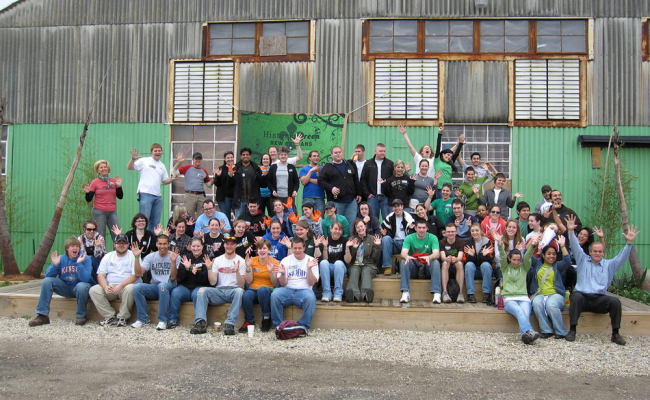
Historic Green volunteers working in the Lower 9th Ward in New Orleans. They currently do most of their work through partnerships in New Orleans and Kansas City, Missouri.

Historic Green volunteers working in the Lower 9th Ward in New Orleans. They currently do most of their work through partnerships in New Orleans and Kansas City, Missouri. (Picture taken by Historic Green)

I have a major soft spot for historic buildings and community outreach initiatives. These two things go together like peanut butter and jelly. Yin and yang. Captain & Tennille. Yep. A colleague recently pointed me to a group in Kansas City, Missouri that understands this perfect union all too well and has taken it to a level that very much deserves to be recognized, celebrated, and supported.

2363172798_7081637091_b

Yes, there was much work to be done. Some challenges are larger than others, but hey, somebody’s gotta just pick up the tools and get to it. In this case, people are doing it for free, which should, assuming you’re not a cyborg, make your heart explode.

Historic Green is a nonprofit dedicated to helping under-resourced communities rebuild existing homes, community buildings, and outdoor spaces in a way that preserves cultural heritage and focuses on sustainability. They started up in 2007 as a response to Hurricane Katrina. More than 85% of New Orleans’ existing homes were listed on the National Register of Historic Places, homes with rich histories and deep cultural significance, and the need for help and environmentally responsible action was too great to ignore. They started “Spring Greening,” an annual greening event in the Lower 9th Ward’s Holy Cross neighborhood, a neighborhood I’ve been lucky to work in quite a few times myself with the same goal of making the neighborhood viable and sustainable. Here is a draft video recently completed as the first part of a series of videos they are producing around the New Orleans project.

Fixing brick piers, 2012 (Picture taken by Historic Green)

Repointing brick piers. (Picture taken by Historic Green)

Now, to be clear, “sustainability” has become such a buzzword that it has become woefully detached from its intended meaning. The term can be downright cringe-worthy because people now use it interchangeably with unsustainable practices and materials in an effort to market these things as being environmentally-friendly for one reason or another. In the case of Historic Green, the term really does have chops. Historic Green is focused on making utility costs affordable, making buildings healthier, and teaching those who are living in these places how to maintain their buildings and act as stewards to the community at large. Sustainability is about how to realistically keep people in buildings so they don’t end up abandoned and it’s also about educating a population on how to care for these buildings so they will last. Sustainability is about people — it has little to do with recycled content and green gizmos that don’t even function properly without an education component.

Spring Greening 2012 336

Restoring original wood sashes. (Picture taken by Historic Green)

Obviously, it was a no-brainer to reach out and ask if they needed some tools — naturally, they did. The crews are currently working in both New Orleans and in their home city of Kansas City, in its Green Impact Zone. Both projects involve an historic home being fully renovated using affordable and replicable methods, and will feature restoration of historic detailing and carefully measured energy efficiency improvements. Swoon.

So…the tools have been shipped! Stay tuned for updates on what tools are most useful and how they are used in a project focused on restoration, efficiency, and community. I’m very much hoping to carve out time to drive down there and get my hands dirty with this crew. Yep, it’s gonna happen. 

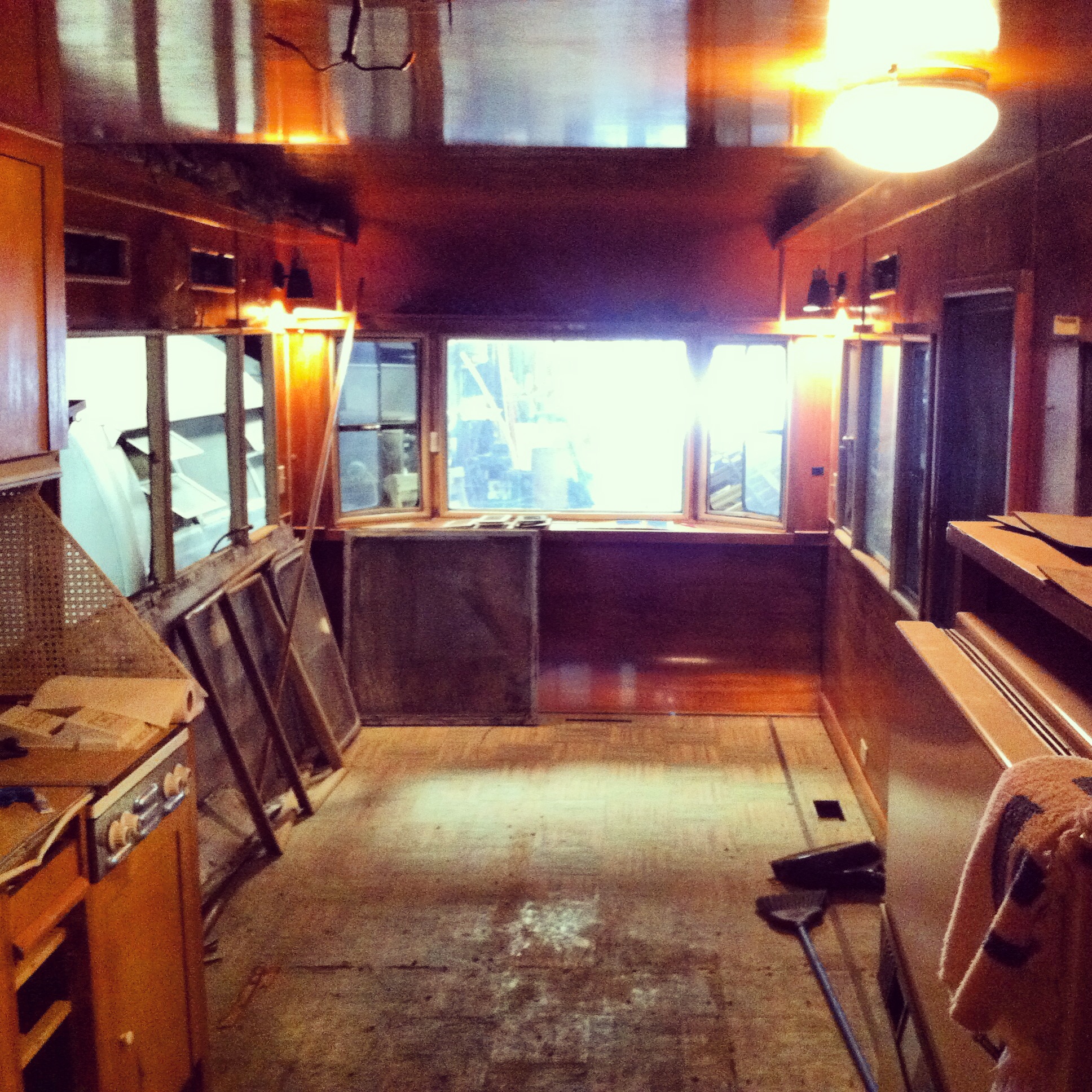
The gorgeous historic home that will be brought back to life using big hearts, lots of sweat, and some shiny new Craftsman tools. (Picture taken by Historic Green)

The gorgeous historic home that will be brought back to life using big hearts, lots of sweat, and some shiny new Craftsman tools. Look at those piers!!! (Picture taken by Historic Green)

Revisiting the Austin Tinkering School

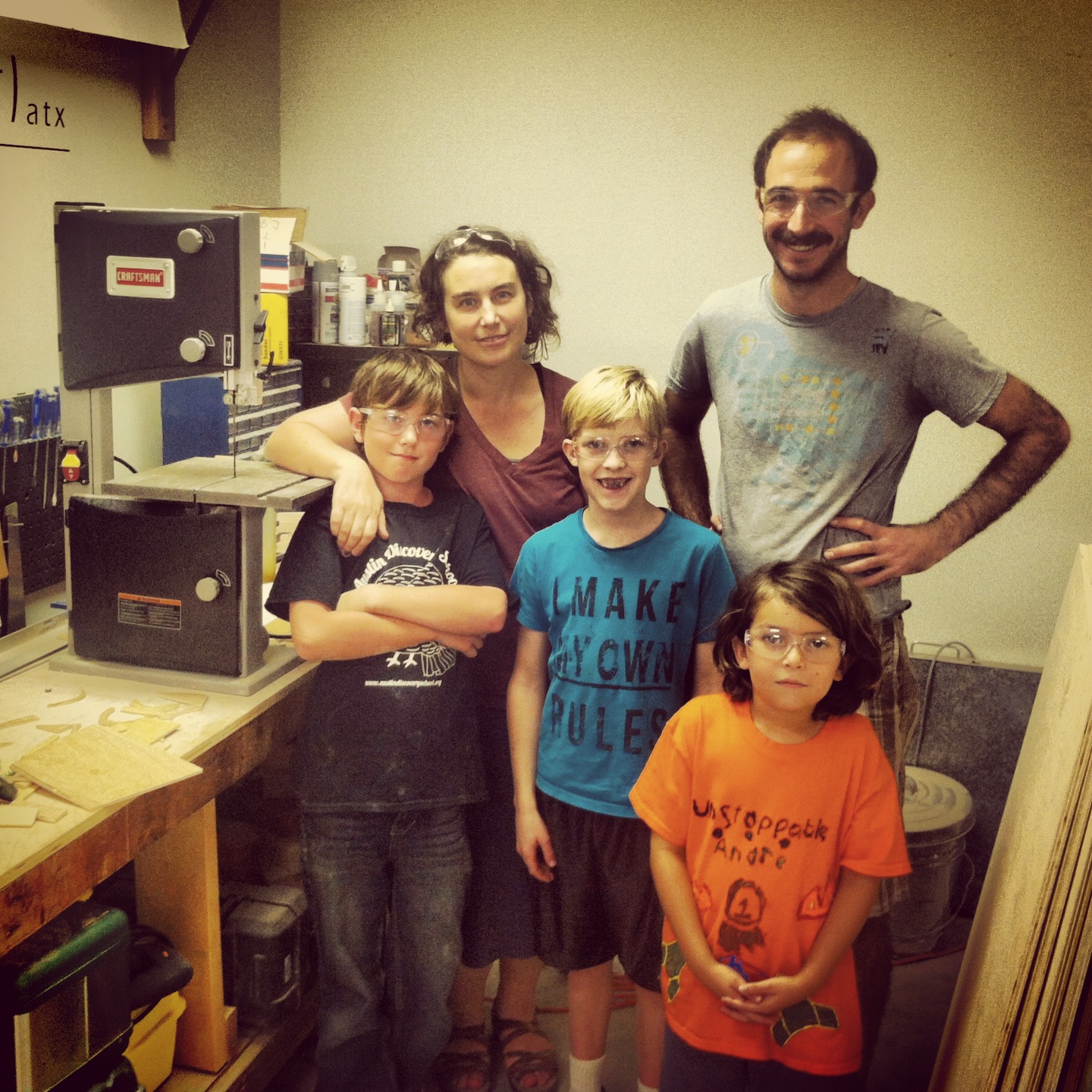
Today's crew at the school. L to R: Jack, Kami, XXX, Oren, XXX

Some of the crew from the Austin Tinkering School in October 2013. (L-R: Jack, Kami, Luke, Oren, and Andre)

In the summer of 2013, I signed a contract to work with Sears and Craftsman to look for groups that needed tools and to write about them. Yeah, dream gig. I was headed down to Texas, so the very first place I contacted was the Austin Tinkering School, a group I learned about through the fixer movement that I’d been involved with for a while. They happily accepted, asked for a bandsaw, proceeded to slay me with their enthusiasm and creativity and fearlessness, and then taught me more than I ever expected to learn about child development. To read more about this wonderful school, its origins, and the tinkering movement, check out this post. Through the magic of the Facebooks, I’ve been able to easily follow the school–they just wrapped up their summer session–and Kami Wilt, the school’s founder, said she’d be happy to send over an update.

I got this email from her earlier today and I swear on my mother’s eyes, there is no secret marketing robot who made this up:

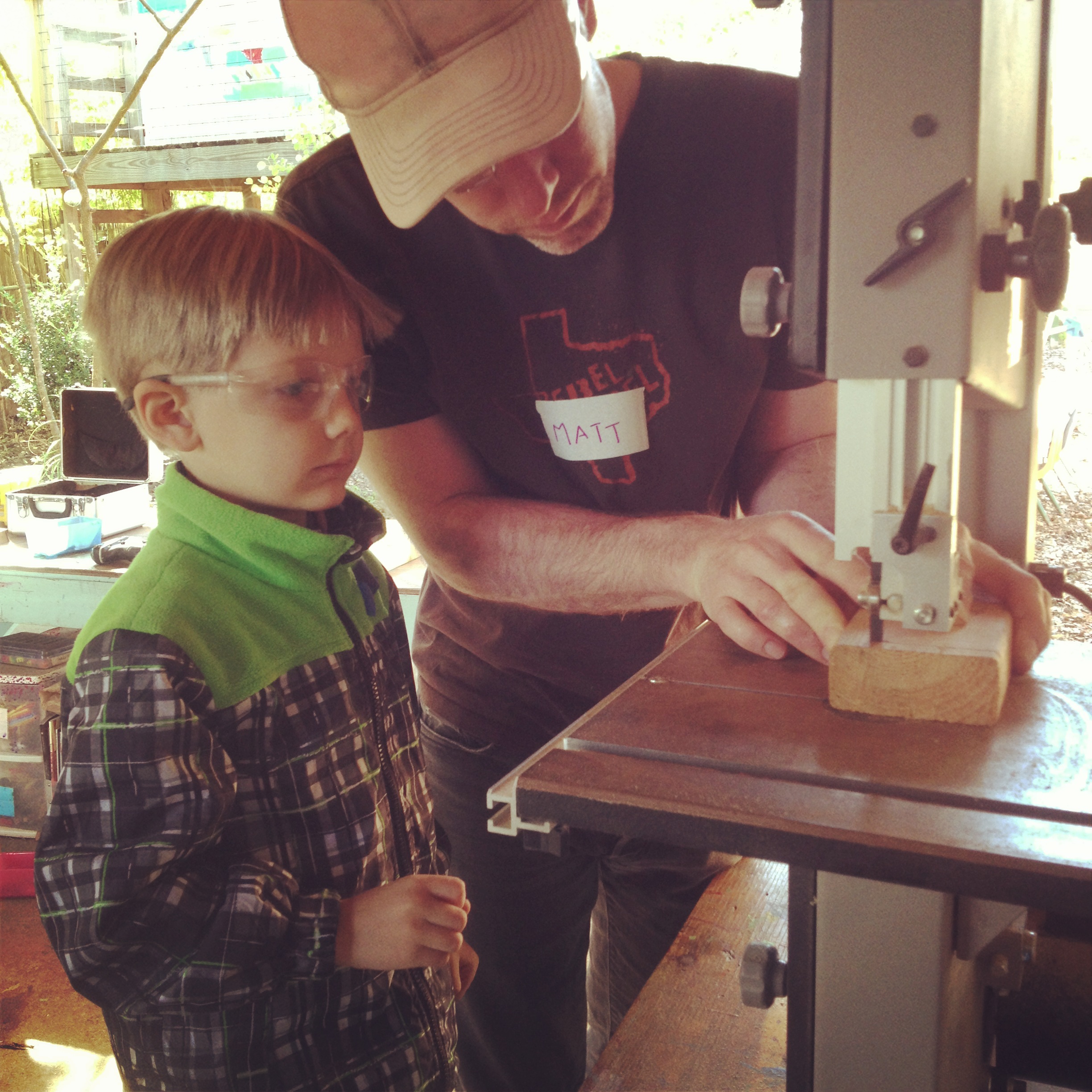
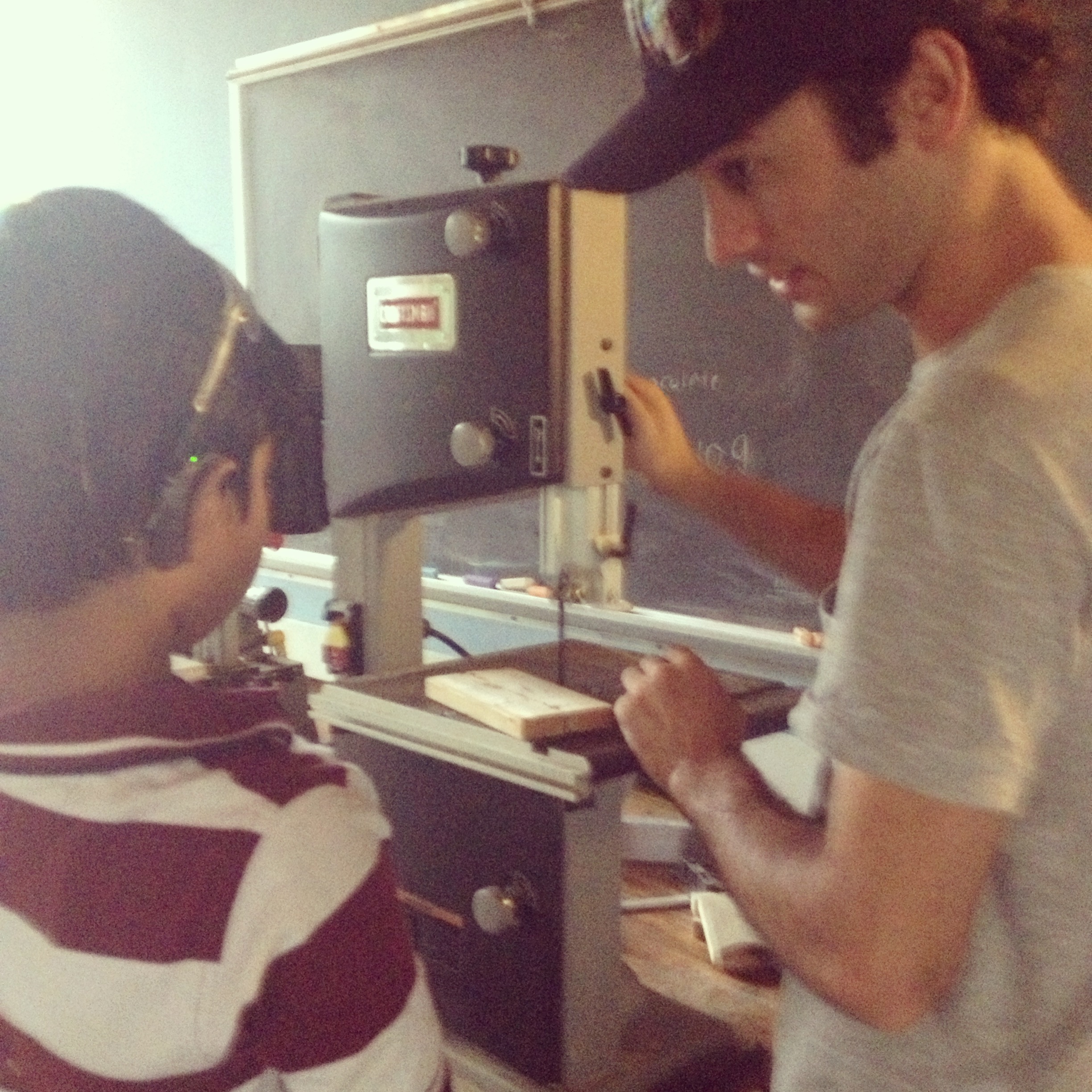
I don’t know how we ever got by before without the bandsaw!  It has been in near-constant use. Before, when we had to make curved and precise cuts, we had to get out the jigsaw, clear off a table, clamp down the wood… it’s a little bit of a production.  And then when we needed to make really finicky small cuts, like when kids want to cut out a really detailed shape, it was pretty harrowing, because the jigsaw is so big and jouncy and it’s hard to give kids free rein with it.
.
Having the bandsaw made it possible for us to make much more detailed and precise cuts, and having it there, set up and ready to go at a moment’s notice was really liberating.  The kids loved it!  There was a line to use the bandsaw all summer long.  Kids were able to cut cool little swords with curvy handles, wheels, doors for dollhouses, the letters for their name… the list is pretty much endless.  The fact that they could cut out pretty much any shape they could draw really opened up limitless possibilities.  And apart from the detailed cuts, it became our go-to tool for just making a quick straight cut.  The bandsaw really completed our shop space and made it a lot more functional and effective.  We’re super, super thankful to Craftsman for donating it to the Austin Tinkering School!
1500927_747718445257264_2017406258_o

Students are trained first in safety and then supervised, but free to do whatever they wish. Basically, there is no right or wrong, they try something and if it doesn’t work out, they try it a different way. Kids aren’t allowed to fail today and as a result, they aren’t allowed to learn how to solve problems and, god forbid, have fun.

IMG_6638

“If kids never learn how to deal with things that can hurt them, they’ll get hurt when they finally encounter them.” -Kami Wilt

IMG_8816

For more information on the original school that inspired Kami to start up a branch in Austin, check this out, and then get out there and start one in your own town: http://www.tinkeringschool.com/

IMG_5809

Trailer Blazers: A weekend up north with vintage trailer restoration gurus

Christie Webber and Shawn Fairchild are collecting and restoring vintage trailers in their spare time.

Shawn Fairchild and Christie MacDonald are collecting and restoring vintage trailers in their spare time. Their addiction is our gain.

Smaller Living

So you like the tiny house movement, right? Want to fit everything you own into a 100-square-foot house with a lofted bed and a toilet that converts into a dining room table? Better yet, do you want the ability to tug this incredibly adorable house on a flatbed behind your Prius and park it wherever you like on trips across the country?

Great, that will only cost you a kabrillion dollars. Of course, if you don’t have that much disposable income, you can just build it yourself. No big whoop.

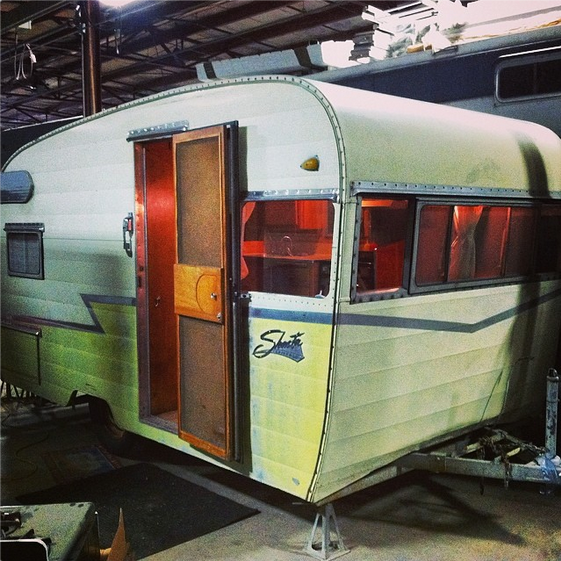
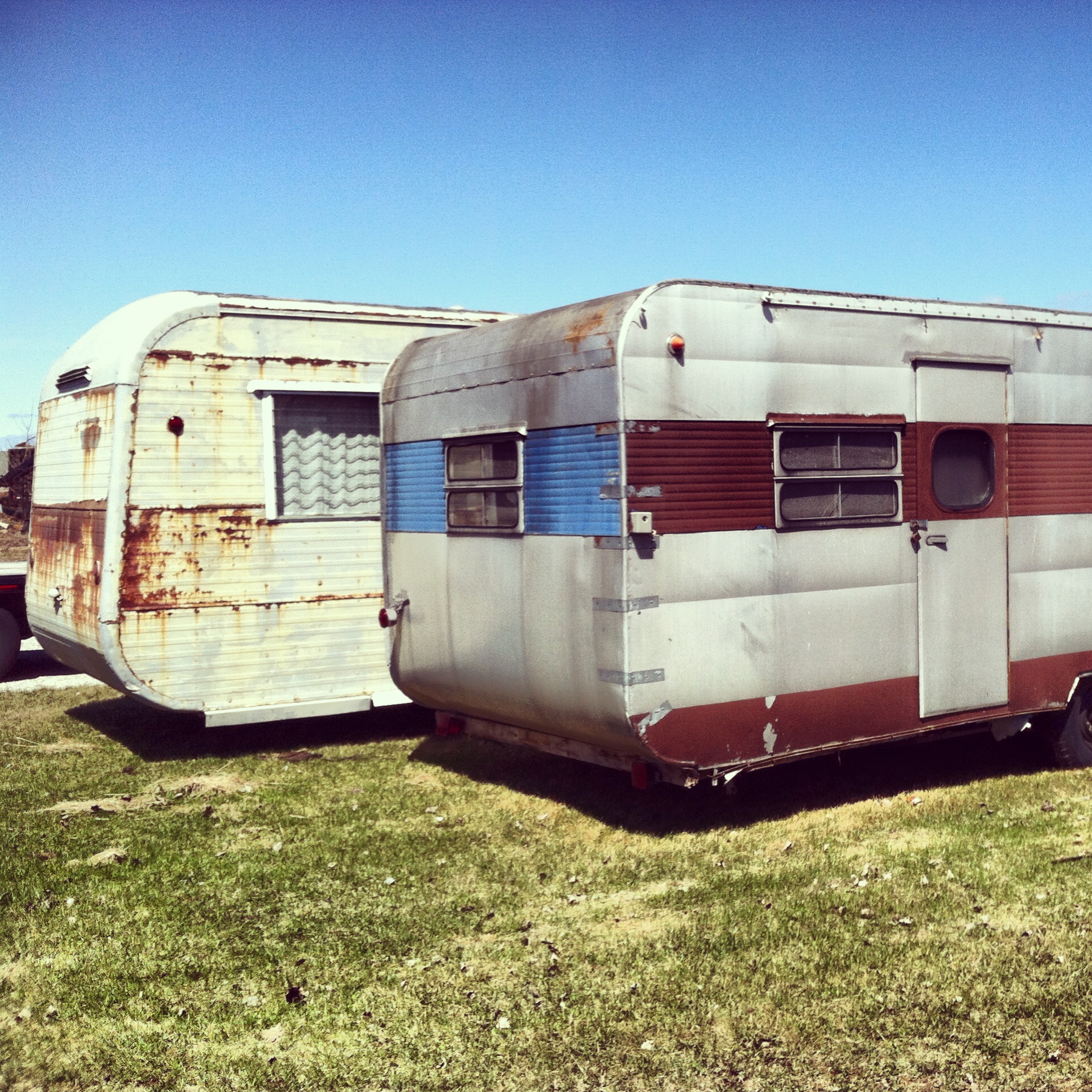
Christie's beloved Shasta, mid-restoration. Shastas were built between 1941 and 2004 and were originally constructed as housing for United States Armed Forces. One of their most charming features are a set of wings on the rear sides of the trailers. These are often difficult to find as they've been stolen off of most of the older models. They are mostly cut off in this pic, but you can see them in the picture above and on the Vin Tin Tin Facebook page.

Christie’s beloved Shasta, mid-restoration. Shastas were built between 1941 and 2004 and were originally constructed as housing for United States Armed Forces. One of their most charming features is the set of wings on the rear sides of the trailers. These are often difficult to find as they’ve been stolen off of most of the older models.

Don’t get me wrong, I love DIY, but building such a thing without experience would require a whole lot of patience and whole lot of time and still would cost some serious moolah. Want an efficient, mobile structure that has everything you need to live, actually was built to be transported, and does not require existing infrastructure to land somewhere for a while? Ladies and gentlemen, it’s time to rekindle our love for the good old American trailer. Ta-da!

I recently drove up to Sturgeon Bay, Wisconsin to meet with Christie MacDonald and Shawn Fairchild to learn about their passion for restoring vintage trailers. Airstreams have been embraced by hipsters from Austin to Seattle, but there are so many more options that for some inexplicable reason, we never hear about.

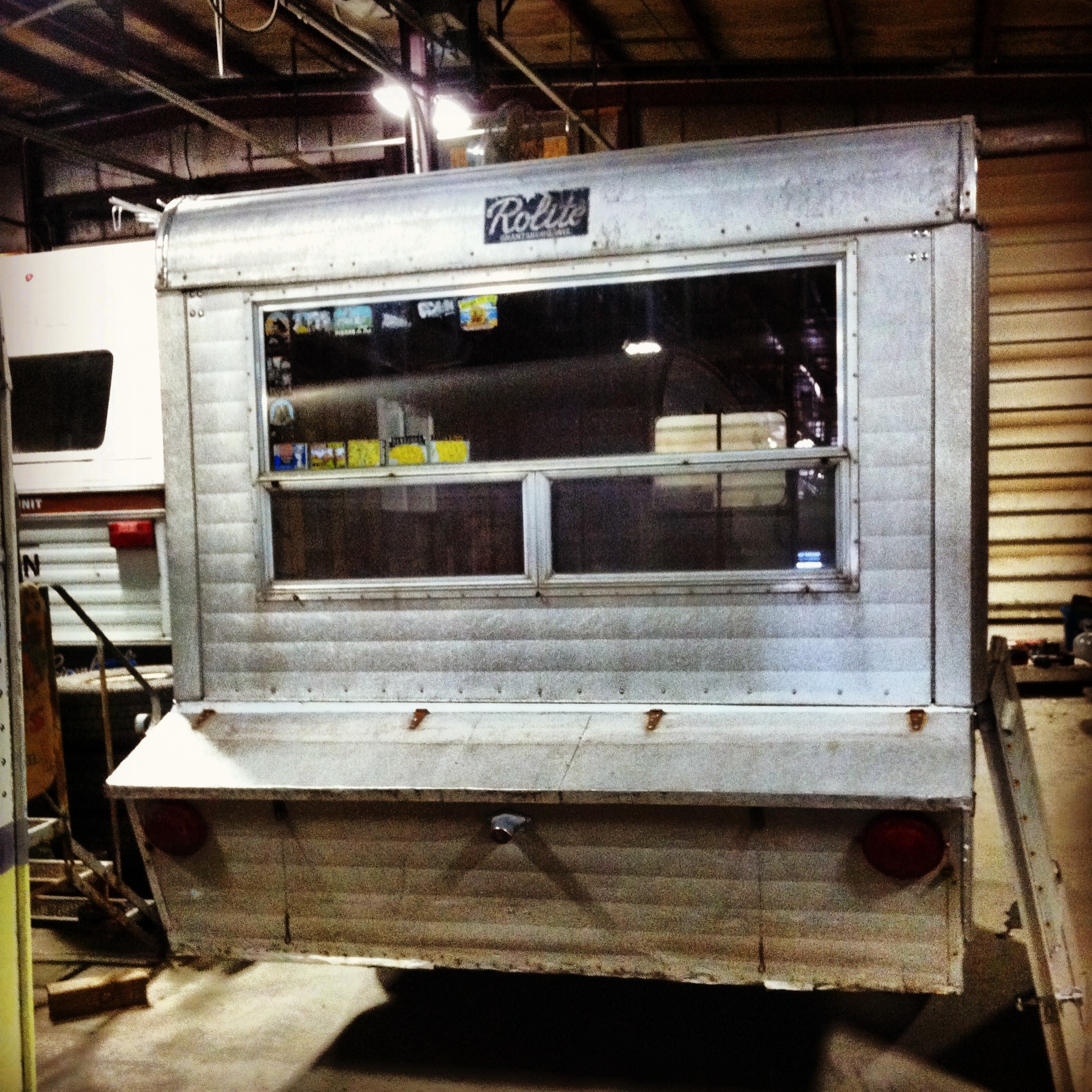
Rolite made the first hardwall pop-up trailers. This guy (with a trunk!!) was build in the 1960s and opened in less than two minutes by pushing a button. The inside sprouts a furnace, stove, sink, closet, dining area, beds and a couch, which fold up or down when the walls and roof are raised. (What?) This particular find has had only one owner--a family that went camping all over the place, sleeping 7. Yes, 7. The other great part is that this trailer was created in Wisconsin, home of Vin Tin Tin. These are super rare.

Rolite made the first hard-wall aluminum pop-up trailers. This good looking guy (with a trunk!!) was build in the 1960s and opened in less than two minutes by pushing a button. The inside sprouts a furnace, stove, sink, closet, dining area, beds and a couch, which fold up or down when the walls and roof are raised. (What?!) This particular find has had only one owner–a family that went camping all over the place, sleeping 7. Yes, 7. The other great part is that this trailer was created in Wisconsin, home of Vin Tin Tin. These are super rare.

About 2-1/2 years ago, Christie and Shawn got together to start Vin Tin Tin, a business restoring mid-century trailers. There are many components to the business, but perhaps my favorite is their plan to acquire land to rent out a collection of their favorite restored trailers in the same way you would rent out cabins on a plot of land. They would be pretty much permanent in their locations with period-appropriate awnings and regular maintenance to keep them looking as amazing as they do in their temporary warehouse home.

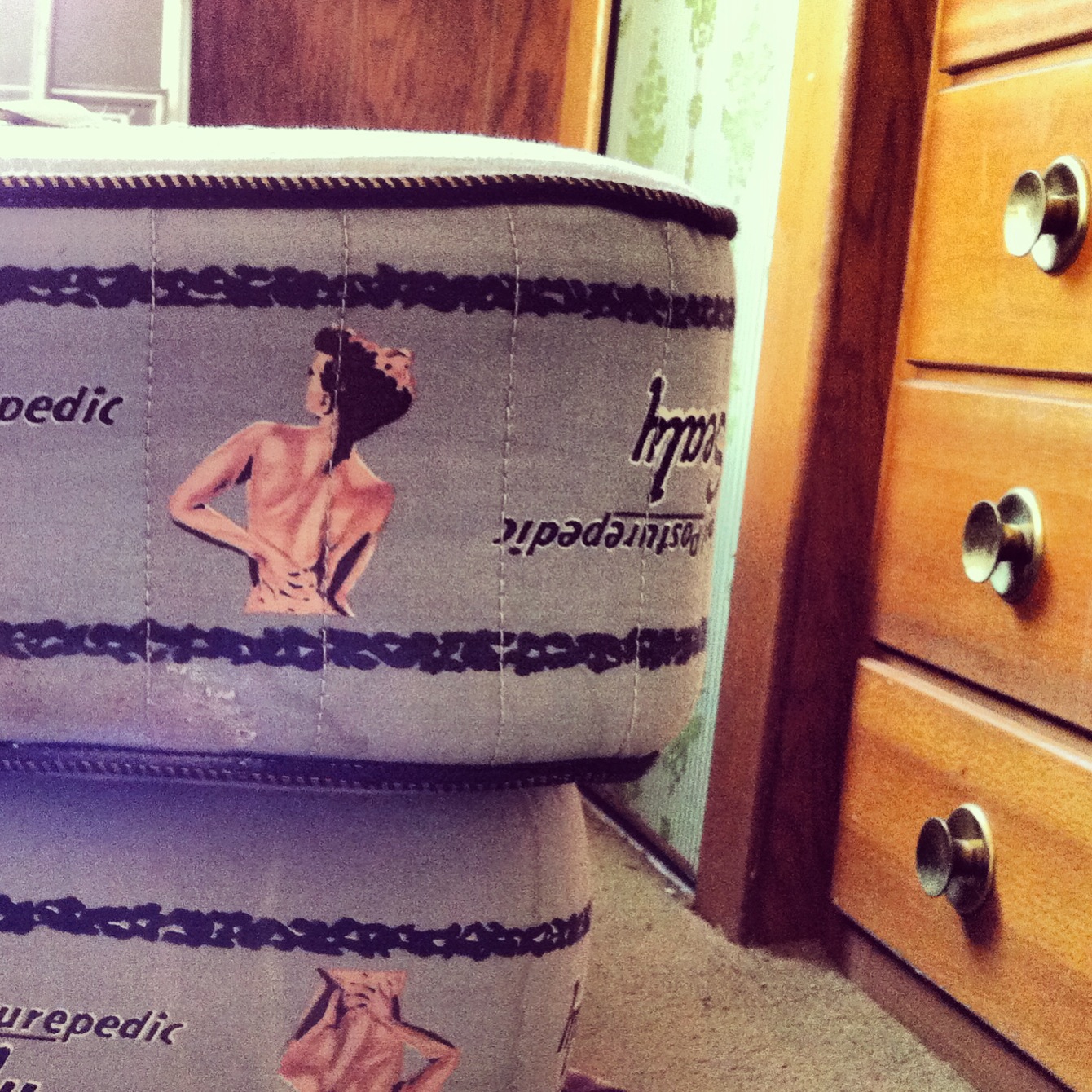
Kristie and Shawn don't mess around when it comes to keeping everything strictly to period. They even plan to have these original mattresses specially cleaned and disinfected to keep them in their original home. Want.

Every detail of these restorations is kept strictly to period. They even plan to have these original mattresses specially cleaned and disinfected to keep them in their original home. Want.

Shawn works on mega yacht interiors during the day and therefore has a wealth of experience working with the same materials found in these trailers, as well as furniture set at a smaller scale. Christie is passionate about research and scouting for new trailers—in fact, they both do all of the work and love all of the components of this business. They are happily hoarding any and all vintage items to fill up these trailers in their huge warehouse—from canopies to ashtrays—all completely to period and in excellent condition.

Nothing can compare with authenticity. And heck, the 50s and 60s were already campy and the vibrant colors and boomerang patterns and metal and curved corners elevate the heartbeat and can’t help but make one feel cheery.

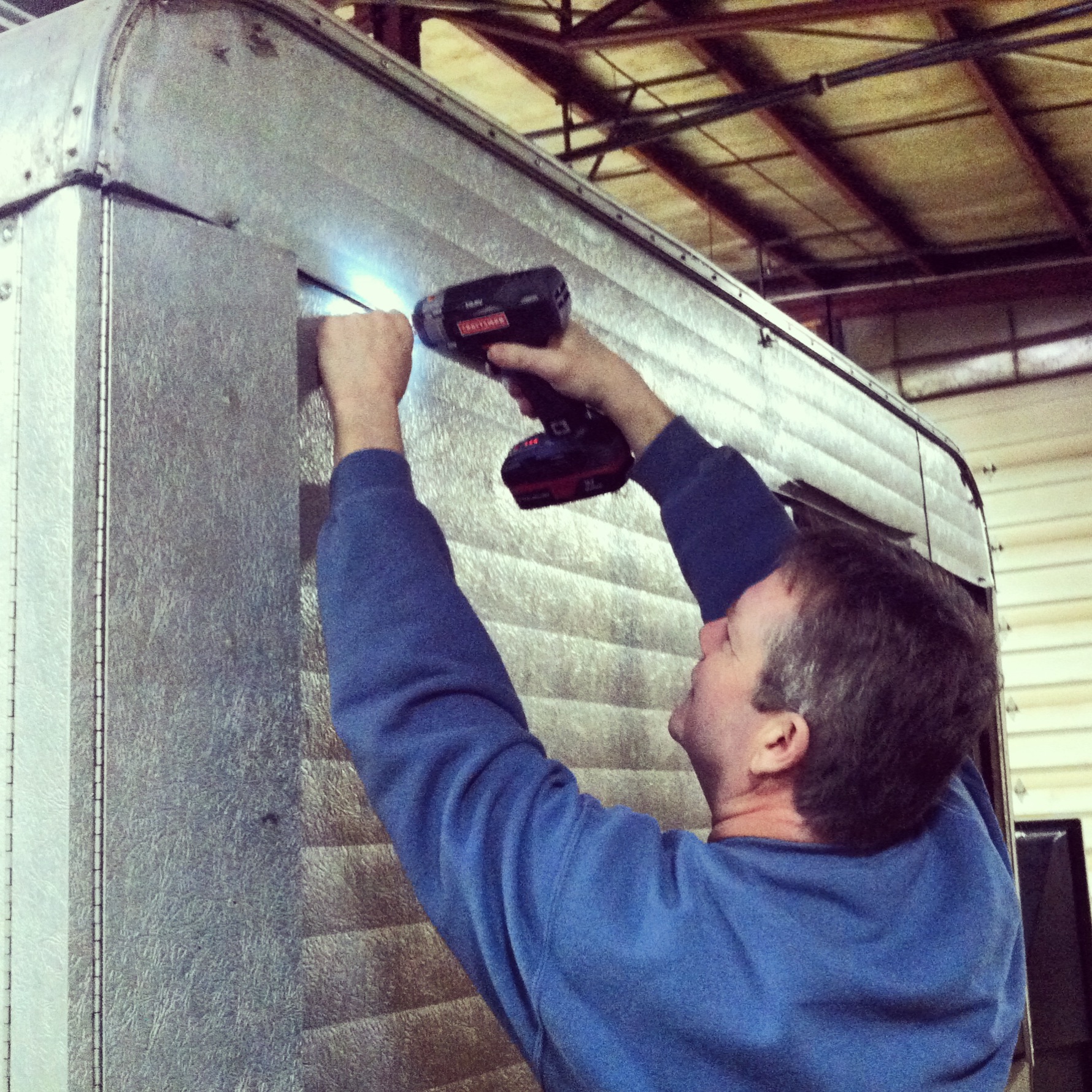
ToolMade drove a Craftsman C3 impact driver kit all the way up to Door County, Wisconsin as an excuse to come meet these folks and see their work. They need these drivers to deal with the insane number of bolts during the restoration process--they once counted 400 on just the BACK of one of a these trailers.

ToolMade drove a Craftsman C3 impact driver kit all the way up to Door County, Wisconsin as an excuse to come meet these folks and see their work. They need these drivers to deal with an insane number of bolts during the restoration process–they once counted 400 on just the BACK of one of a these trailers.

Mobile Home History

In the beginning, the mobile home was an innovation for the wealthy. They came up around the start of the automobile era and allowed for long, leisurely trips before highways sprawled and cut across the landscape and emptied into avenues lined with motels. During WWII, the federal government, focusing more on portability and convenience than luxury, purchased tens of thousands of trailers to house workers producing goods for the war. After the war, trailer parks started popping up on college campuses to house former soldiers under the G.I. Bill.

Stripped down to the "studs."

Stripped down to the  studs.

Things shifted further in the 1950s and the mobile home became a low-cost residence, often parked permanently in a rapidly growing number of trailer parks around the country. Today, there are 8.6 million of these homes, housing around 12 million people. A stigma still surrounds the trailer park, though that may be shifting again as retirees are buying them up like crazy.

This luxury camper is similar to the model that Lucy and Desi made famous in the 1950s. All of the trailers that Christie and Shawn buy are rare or coveted for one reason or another. There is no lack of personality.

This luxury camper is similar to the model that Lucy and Desi made famous in the 1950s. All of the trailers that Christie and Shawn buy are rare or coveted for one reason or another. There is no lack of personality.

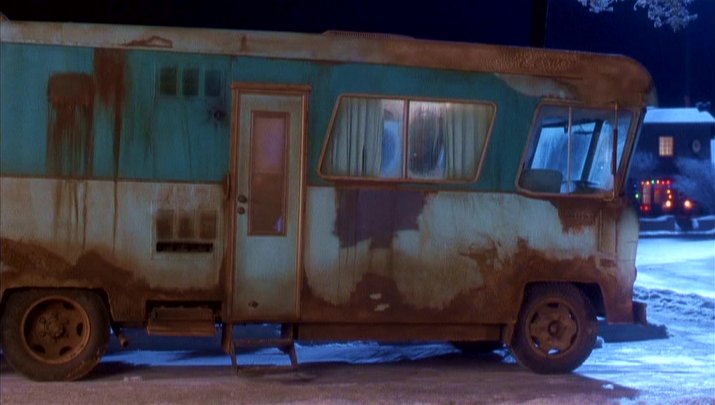
Unfortunately, there is a lot of regulation surrounding trailers—often in an effort to combat this stigma. Christy and Shawn explained that the smaller trailers that they work on are generally not welcome to park in otherwise trailer-friendly areas. There are rules in place that restrict trailers over a certain age—rules like this are basically intended to keep out people like Cousin Eddie and his rusted 1972 Ford Condor. Of course, trailers made now are made with increasingly lousy materials in an effort to keep them enormous but also meet fuel efficiency regulations. They’re downright flimsy compared with vintage trailers, and utterly forgettable. But, as we’ve seen with architecture, we are told to value bigger, crappy living quarters verses smaller, quality spaces that work. Don’t get me started.

Fortunately, to combat this nonsense, Christy and Shawn also plan to make land available for smaller trailers to come and hang out and live their handsome little lives. Check out the pics and links below for more information, and especially follow Vin Tin Tin’s Facebook page for more pictures and information on their future endeavors. I’ll wave to you from the Shasta I’m renting on their land.

For more on the restoration work of Vin Tin Tin, check out their picture-laden Facebook page.

For more on the history of pop-up campers.

A rather fascinating New York Times article on today’s trailer parks.

My god, even the curtains are original in this puppy. Swoon.

My god, even the curtains are original in this puppy. Swoon.

Some bigger projects outside of the warehouse space.

Some bigger projects outside of the warehouse space.

I can't stop posting pictures! These are some other immaculate vintage finds that will eventually accompany their appropriate trailer at the rental park. None of this stuff is reproduced. Original or nada.

I can’t stop posting pictures! These are some other immaculate vintage finds that will eventually accompany their appropriate trailer at the rental park. None of this stuff is reproduced. Original or nada.

Details. Sigh. These things will be cleaned up, but man, they even look good in this state.

Details. Sigh. These things will be cleaned up (sorry, Christy, I know you don’t like the rust pictures), but man, they even look good in this state.

Eat your heart out.

I mean, eat your heart out.

Saving South Bend

One of around 1700  vacant homes in South Bend whose fate is yet to be determined. (South Bend Times photo by Greg Swiercz)

One of around 1700 vacant homes in South Bend whose fate is yet to be determined. Sure would be a shame to see you go, good lookin’. (South Bend Times photo by Greg Swiercz)

South Bend, Indiana is, like many Rust Belt cities in the Midwest, marked by de-industrialization and population decline. The economic shocks of past decades—attributed to factors like the transfer of manufacturing to the Southeast, the decline in steal and coal industries, and good old globalization—have left a lot of these cities without jobs and well, without as many people. So, South Bend found itself with more homes than could be filled, currently around 1700 vacant properties, which apparently must either be smashed to bits or rehabilitated. Well, guess which is usually cheaper?

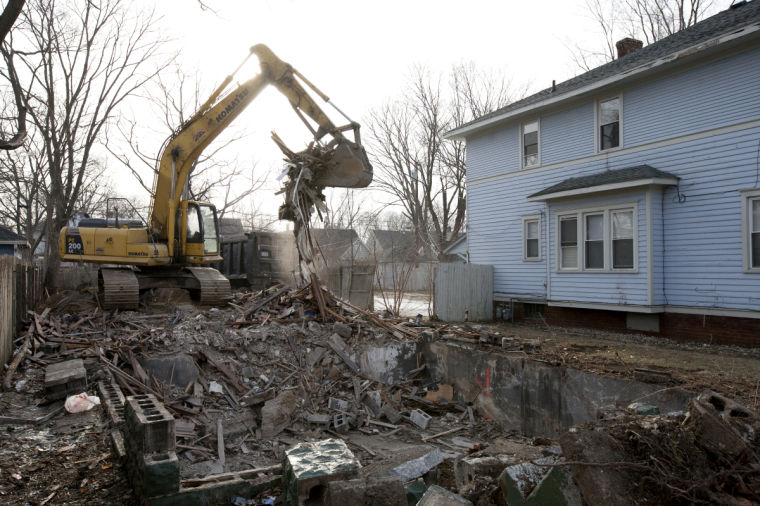
A home is demolised in a Near Northwest neighborhood. The demo is part of the city's push to address 1,000 vacant homes in 1,000 days. (South Bend Times photo by James Brosher)

A home is demolished in a Near Northwest neighborhood. The demo is part of the city’s push to address 1,000 vacant homes in 1,000 days. It might be worth arguing that if we addressed all of our issues by turning them into tiny obliterated hunks of waste, we might not quite be addressing the root cause. (South Bend Times photo by James Brosher)

Here’s the thing—it’s not the building stock’s fault that there was an exodus. In fact, the buildings in many of these cities, which once boomed with jobs and industry, are generally pretty extraordinary, laid out in well designed planning grids with accessible and centralized main streets. They are walkable and human-scaled and downright handsome. These historic structures are also unequivically the greatest assets these cities have to offer. They hold their resale value better (think long-term), are made with incredible old growth wood and other materials that are no longer available, and will, quite frankly, easily last another century if they are just shown a little TLC. This is simply not the case for new construction which tends to be out of scale, made with inferior materials, and ages about as well as acid-washed jeans.

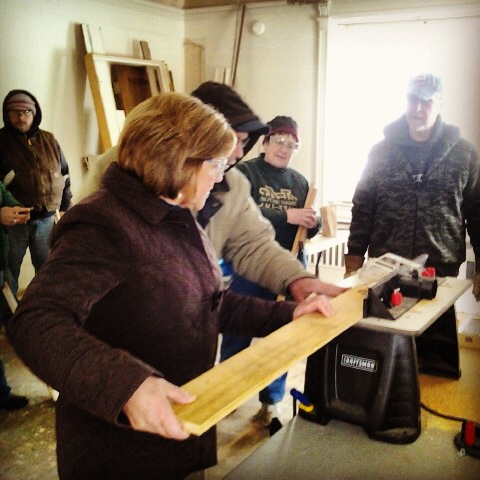
Local residents learn the basics of power tools through a Restore Michiana workshop. Empowering people to fix up their homes and neighborhoods is a slick and useful way to help save your city.

Local residents learn the basics of power tools through a Restore Michiana workshop. Empowering people to fix up their homes and neighborhoods is a slick and useful way to help save your city. (Photo by Restore Michiana)

So, it was a no-brainer for ToolMade to support a group in Indiana that is working to empower homeowners by offering workshops that help them repair and restore their buildings. South Bend’s aggressive demolition program is already in the works and is set to span the next three years, so if the local government doesn’t see the value of preserving more of its built environment, it’s time to educate and put tools in the hands of residents who want to fight for their history and quality homes and neighborhoods.

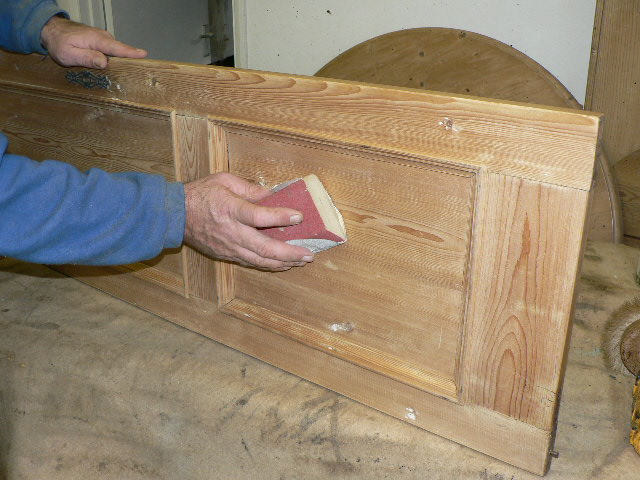
Pad sanding like a boss.

Using a pad sander like a boss. (Photo by Restore Michiana)

To help fill the knowledge gap and teach homeowners and contractors how to work on these buildings, people like Elicia Feasel and Steve Szaday create and run workshops through Restore Michiana. This group is the result of a partnership between Indiana Landmarks and Historic Preservation Commission of South Bend and St. Joseph County. Why the partnership? As Steve puts it, “every house has a story, even if it was no more than Billy’s Grandma’s house…and if we can teach someone enough to give them the courage and skills to save that house by doing some of the repairs themselves, we have successfully made a difference.”

Hardware 101.

Hardware 101. (Photo by Restore Michiana)

The workshops are lead by experts in specific fields and are refreshingly cheap—usually around $25-30 for a whole day, sometimes with pizza included! In the past two years alone, hundreds or locals and contractors have taken classes through Restore Michiana. Lectures have been given on a topics like how to research your home’s history, historic paint colors, and historic masonry care. Hands-on workshops have focused on plaster repair, wood floor repairs and refinishing, and the upkeep and repair of historic wood windows.

"Life leaps like a geyser for those who drill through the rock of inertia." -Alexis Carrel

“Life leaps like a geyser for those who drill through the rock of inertia.” -Alexis Carrel (Photo by Restore Michiana)

The program is self funded and all of the fees are used up to print flyers, buy supplies, and help reimburse equipment rentals and or logistical costs. Some local hardware stores have helped by providing basics like glazing, chemicals, wood fillers, etc., and all of the tools that were used on these workshops were either brought in by guest experts or are a part of the Restore Michiana’s personal home stash of tools. This unfortunately meant that all the tools had to be shared, even with 15-20 people in a class. That’s limiting and frustrating if you’re itching to get some hands-on know-how.

If you want to save your homes, resources, neighborhoods and possibly even souls, you must provide pizza. It is the #1 rule of organizing.

If you want to save your homes, resources, neighborhoods and possibly even souls, you must provide pizza. It is the #1 rule of organizing. (Photo by Restore Michiana)

The May class was a day-long Intro to Power Tools workshop for people having little to no experience using tools. The focus was on learning the basics of sawing, routing, sanding, and drilling, and took place at one of the most enduring and unique properties in St. Joseph County, the Birdsell mansion. The building is a Local Historic Landmark built in 1898, and currently available for lease (yes, sure, this is a plug. Preservationists ain’t nothing if not resourceful).

Thanks to the support of several concerned groups, more of these classes are going to happen going forward. If we want our neighborhoods to improve, we have to get out there and get our hands dirty.

Thanks to the support of several concerned groups, more of these classes are going to happen going forward. If we want our neighborhoods to improve, we have to get out there and get our hands dirty. (Photo by Restore Michiana)

Several sponsors, ranging from hardware stores to Habitat for Humanity to real-estate groups to the local pizza spot underwrote/sponsored the event. ToolMade donated several items including a much-needed Craftsman Lithium-Ion 3-Piece Combo Kit (a drill, circular saw, work light, extra lithium battery, circular saw blade and a multi-chemistry charger), a Compact Lithium-Ion Battery Pack, and an ever-useful pad sander. The best news? Because the Power Tools was so well attended and now has more of the needed tools, there will be more of these classes going forward. Not bad for a crew working on a shoestring budget that is also conducting a number of other classes, often dragging in tools from their own garages. And so, I am left with no choice but to bust out the old Margaret Meade quote to wrap this one up: “Never doubt that a small group of thoughtful, committed citizens can change the world. Indeed, it is the only thing that ever has.” I know, but come on, it’s just so damned true.

Digging in the dirt: The absolutely essential need for kids to know what they’re eating

1506395_10152864513989119_133232486_n-1Joseph Dummitt has been teaching after school programming through a charitable arm of the Chicago Public Library for the past 5 years. Monday through Thursday, from 3pm-6pm, he helps kids with their homework until their parents are able to pick them up. And sometimes, when they finish early enough, he teaches them how to garden and about where their food comes from.

There is zero budget for the food education component of this program, so tools were desperately needed to build raised beds and cultivate the gardens. Joseph reached out with a “dream list of tools” and I drove out to the McKinley Park library with all of the Craftsman gardening items I could get a hold of, including a trowel, a couple of cultivators, a bow rake, a curved claw hammer, a garden hoe, a digging fork, and a round point shovel. Joseph and a 2nd grader named Daron came out to the car to help bring all of the tools into the library. I’m not sure how to describe them except to say that they were outright gleeful when they saw the goods. I was in a lousy mood earlier that day. That mood was utterly obliterated.

Joseph working with a student at the McKinley Branch Library.

Joseph working with a student at the McKinley Branch Library. (Original photo source: Streetwise)

When we got inside, I asked Joseph why he decided to put the extra effort in with the gardening program. He looked at me, then turned to Daron and said, “hey, what did they give you to eat at school today,” to which Daron replied “Ummm, chicken nuggets. Oh, and bread. Bread, too.” Then he looked back at me with the same expression of “seriously, how can I not.” Basically, kids just eat fillers and garbage that doesn’t look like food and in some ways really isn’t even food. Joseph grew up around farms and gardening with his family in Champaign, Illinois and couldn’t believe how detached these kids were from their food supply. So basically, he just took up the cause. He has been working with the library to carve out a little space and grow things with the kids, things that are hard to kill like green onions, tomatoes, leafy greens, and wild flowers. He said that when he picks something that they’ve grown and hands it to them to take a bite, they are completely mystified. Maybe even terrified.

Boooo.

Boooo. (Original photo source: Chicago Now)

As the population of the United States has transitioned from a predominantly agrarian society to an increasingly more urban one, our youth have become detached from a fundamental understanding of agriculture. Food just appears and lives in supermarkets. Chicago is around 85% paved, and many areas with patches of green space find out that those patches are contaminated from years of  surrounding industry pollution, so it’s no wonder there is a disconnect in most urban environments. And don’t get me going on what food we subsidize in this country. It’s criminal.

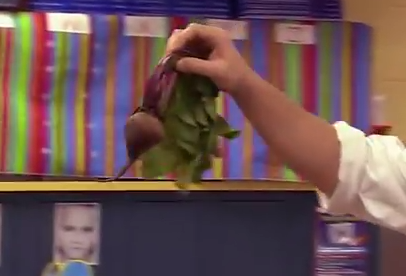
The following pics are screenshots from Jamie Oliver's t.v. show. He asked a bunch of grade schoolers what the following vegetables were. Apparently, these are potatoes.

The following pics are screenshots from Jamie Oliver’s t.v. show. He asked a bunch of grade schoolers what the following vegetables were. Apparently, these are potatoes.

This detachment from food and farming has gone on long enough that in some cases, multiple generations of families just have absolutely no idea how to cook real food. Microwaves or bust. And if you aren’t teaching these things at home, perhaps you assume that schools will surely pick up the slack, eh? Yeah, nope. School is supposed to arm kids with tools to navigate the world, but it hasn’t evolved to address our current crises and usually doesn’t address health and nutrition in any meaningful way, if at all. In fact, classes like home economics have been cut in most schools because they aren’t seen as being vital. Ha. Also, schools serve crap for lunch. 31 million kids pick up highly processed fast food from the lunch lady each day and wash it down with chocolate milk. It’s literally killing them.

"Broccoli?"

“Broccoli?”

According to the American Heart Association, about one in three American kids and teens is overweight or obese, nearly triple the rate in 1963. Instead of having to deal with skinned knees at recess, they are sedentary in their classrooms and dealing with issues that only adults experienced before like high blood pressure, type 2 diabetes, and elevated blood cholesterol levels. I can’t even imagine these things being discussed when I was a rambunctious little troublemaker in the early 80s. To top things off, obese kids are, of course, more prone to low self-esteem, negative body image and depression. Good thing we live in a world where kids are getting positive feedback from media and movies that people of all shapes and sizes are beautiful! Oh, wait.

Screen Shot 2014-03-28 at 2.51.30 PM

“Celery?” “Onion!”

So listen, support people like Joseph who are trying to combat this issue through education. Put some shovels into the hands of kids, dig some holes with them, and show them what real food is. Let them have that joy of picking something off of a vine and biting into it. If schools and families aren’t equipped to teach these kinds of skills, help out anyone who is able and willing. Or volunteer to do it yourself because most of us adults would surely benefit from more time in a garden as well. Stay tuned—I’ll be doing a follow-up post once those beds are built and the planting begins.

"Pear?" And after a big hint from Jamie: "Egg salad!"

“Pear?” And after a hint from Jamie: “Egg salad!”


Man vs. Machine: A Selective History of the Industrial Revolution and the Beastly Hand- vs. Power-Tool Wars

I can't believe it took me this long to use a Rocky IV image in this blog.

I can’t believe it took me this long to use a Rocky IV image in this blog.

A long and vicious battle rages between two factions of humans, a battle that shows no signs of resolving itself, but instead simply reinvents itself with each generation of wide-eyed and bushy-tailed DIYers. I’m speaking, of course, of the hand toolers vs. the power toolers—groups that admittedly co-mingle often times, but oh, not always. No, not always. Here is a little on the history of the origins of this war as I understand it–I think you’ll find that it is pretty much exactly like the Human/Cylon war, or that it carries the spirit of the Rocky IV Cold War plot line.

The principal tools that the carpenter needed to frame a house: felling axe (4), wedge and beetle (7 and 8), chip axe (10), saw (12), trestle (14), and pulley (15). (Charles Hoole transl., London, 1685. Courtesy of the Folger Shakespeare Library.)

The principal tools that the carpenter needed to frame a house: felling axe (4), wedge and beetle (7 and 8), chip axe (10), saw (12), trestle (14), and pulley (15). (Charles Hoole transl., London, 1685. Courtesy of the Folger Shakespeare Library.) Don’t they look just pleased as punch?

Up until the late 18th Century, everything was made by skilled and industrious little human hands. People likely sang songs and whittled/chopped/pulleyed away at whatever their locally available resources were and created lots of really great objects and dwellings. Look at those charming saw cuts! You could likely read them like tea leaves. Sigh. These workers sharpened their chisels with great care and love, and no doubt had an emotional connection to these hand-forged tools of their livelihood and artistry. Maybe they even named them. I bet they did. (I would)

Die Spinnerinnen by Diego Velazquez. 1640s.

Die Spinnerinnen by Diego Velazquez. 1640s. Romantic, eh?

But then one day, crafty, mustache-twirling England decided to go ahead and have an good old Industrial Revolution. It had occurred to some businessmen that if they could make more stuff and make it faster, why, they could make a lot more bees and honey. There are also plenty of theories about politics and land use, but we’ll skip over those because this blog is already assured to rival a Tolstoy novel in length. So anyway, these business men got smart to the advantages of harnessing the power of rivers and streams to mechanize the textile industry, moving the industry from households to factories. Before this, the work was mainly domestic–the kiddos would deal with the raw cotton, the women would spin it, the men would weave it. It was like a Cosby episode but with fewer geometric patterns (and likely also pre-hoagie). All the wool was from England and the cotton was imported. Then these machines were built and everything moved into factories and the Western world shifted from a Thomas Hardy novel to a Chaplin film in a matter of decades and the rich got richer and the poor got poorer and Oliver Twist and all that.

Mass production with unskilled labor and pointy-hatted overseers! Decidedly less romantic.

Mass production with unskilled labor and pointy-hatted overseers! Decidedly less romantic.

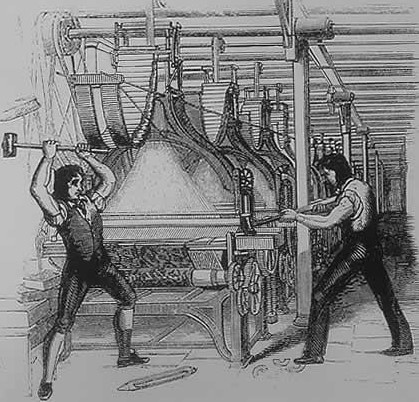
A fun side effect of this transition were the actions of the Frame-breakers, or Luddites, who would partake in “machine-breaking,” which is what it sounds like. Smashy, smashy. Machine-breaking was criminalized by Parliament in the 1720s, but those Luddites didn’t let a slap on the wrist stop their ideological antics, so the Frame-Breaking Act of 1812 made the death penalty available.

Luddites, smashing a loom.

Luddites, smashing a loom. Ahhhh, god, I love this.

Sometime during the 1880s, an industrious young apprentice names Samuel Slater was hanging around England and decided that this mechanization business was a grand idea and that stealing this idea was an even better idea than the idea itself. He memorized the plans for these mills and took them all up in his head on a ship to America. America liked this idea a whole lot, especially because it had a much scarcer labor force, and with this mechanized machinery, productivity could go up and up and up. Quickly, Americans were making not only textiles but also furniture and anything else they could think of, and  thus, Slater was dubbed the “Father of the American Industrial Revolution” by Andrew Jackson (and “Slater the Traitor” by the Brits). He became rather wealthy, in case that cliffhanger was bothering you.

foto3big

The results of being employed on an assembly line, according to Chaplin, result in great indignities, inhumane work conditions, and ultimately a nervous breakdown. But damn, it’s fun to watch.

Likely the most notable innovation of the Industrial Revolution was the assembly line. It allowed for products to be made much more quickly and lowered prices, but made the work boring and allowed unskilled labor to enter the workforce. People who can make things with virtually no training at all were naturally seen as expendable bodies—perhaps even more expendable that the beloved sharpened chisels of yore. So children, death, uprising, weekends, cubicals, death.

The end.

Okay, fine, this makes any sort of non-hand tool production sound oppressive and unskilled and like there has been no benefits whatsoever from innovation and all that business. I get it, I get it. In defense of power tools, which I use allll the time, they are of course faster, require less maintenance, and remove a lot of the monotonous stretches of the production process. Hand toolers could argue that there is a loss precision and control and art with mechanized devices, and sure, this is also correct. Basically, they both have their advantages and probably work best together, but I’m not aiming to change minds. This entire post only happened because I started wondering what the drill equivalent would be with a hand tool (an increasingly complicated egg beater-like device kept coming to mind), so I thought it would be fun to dig up the hand tool equivalents are to some commonly used power tools. So here goes. Feel free to chime in with any others, of which there are likely a googobrillion.

Ye olde miter box is a mighty handy alternative to the miter saw.

Ye olde miter box is a mighty handy alternative to the miter saw.

The block sander is still pretty commonly used. Sometimes the power sander can be overkill or you're just not near a power source.

The block sander is still pretty commonly used. Sometimes the power sander can be overkill or you’re just not near a power source.

Gimlets drilled holes for screws and had a much more interesting, though less descriptive name than a power drill. They are also great to drink.

Gimlets drilled holes for screws and had a fantastic name. They are also great to drink.

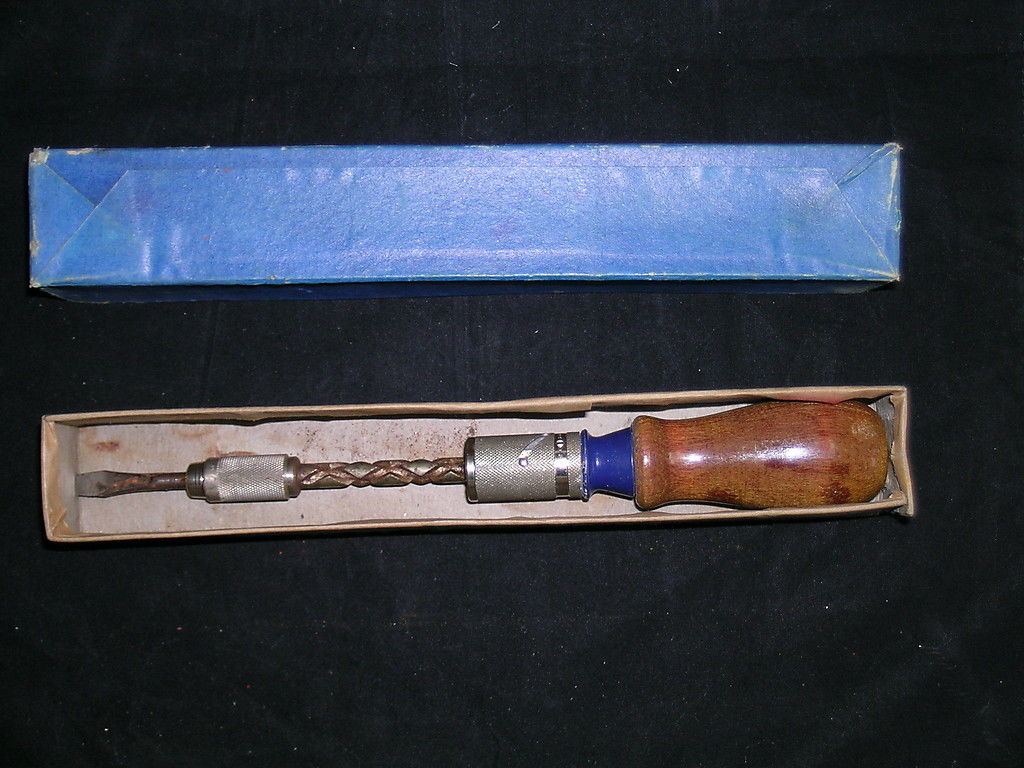
A yankee! Also a great name. No driver needed with this puppy, though yes, the process is a wee bit slower, especially when using old growth.

A yankee! You are correct, this is also a great name. No driver needed with this puppy, though yes, the process is a wee bit slower, especially when using old growth.

The precursor to a jigsaw is a bow saw. Handsome devils that look like an instrument.

The precursor to a jigsaw is a bow saw. Handsome devils that look like something a butch cherub would play atop a Swiss mountain.

An arborists saw (or pruning saw) is the older brother to the decidedly less delicate but more productive chainsaw. I like to think of chainsaws as the football captains of the tool world.

An arborists saw (or pruning saw) is the older brother to the decidedly less delicate but more productive chainsaw. I like to think of chainsaws as the football captains of the tool world.

This antique 45 quarter round moulding plane is the steampunk version of the more modern
This antique 45 quarter round moulding plane is the steampunk version of the more modern router.

Aaaaand, the hand plane.

Aaaaand, a favorite, the hand plane. Good lord, these are so pretty. And provide an excellent shoulder workout.

The American Hobbyist

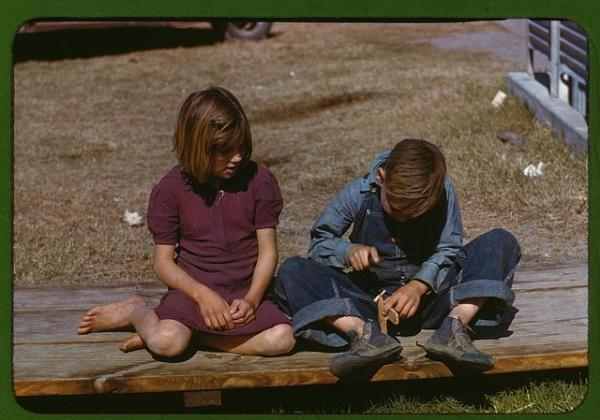
Boy building a model airplane at a Farm Security Administration (FSA) camp. Initially created as the Resettlement Administration (RA) in 1935 as part of the New Deal in the United States, the FSA was an effort during the Depression to combat American rural poverty. The kids stayed busy as well.

Boy building a model airplane at a Farm Security Administration (FSA) camp. Initially created as the Resettlement Administration (RA) in 1935 as part of the New Deal in the United States, the FSA was an effort during the Depression to combat American rural poverty. The kids stayed busy as well.

During the Great Depression, there was death, famine, and extreme poverty. There was also a hell of a lot of quilting going on. The un- or under-employment in the 1930s brought with it a nationwide hobbies movement, promoted by everyone from Hollywood child stars to POTUS. Hobbies are generally defined as “specific activities pursued voluntarily in non-work hours for pleasure,” though many hobbies actually did have some tie to the economy, even if the pay wasn’t immediate or monetary (think: build your own or grow you own).

Having spare time was a new concept for many, and the U.S. government actively promoted and encouraged things like stamp collecting (FDR was a huge fan so it boomed), sewing, metalworking, model building, leatherworking and other useful or educational busy work as socially acceptable ways to spend one’s time. Guardians of public morality, such as government officials, ministers, and educators fretted about “morally dangerous activities” when the public was idle. So, you know, things like building model trains emerged as “approved” areas of leisure over activities like, say, gambling or counterfeiting. Hobbies also preserved a pro-work attitude and ethic, and developed job skills at a time when work was scant.

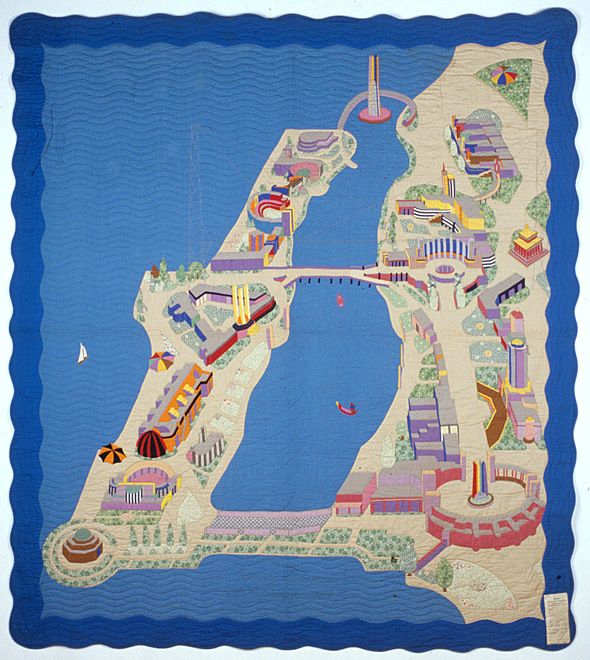
1933 map quilt Birds Eye View of the Chicago World's Fair

1933 map quilt titled “Birds Eye View of the Chicago World’s Fair.” The Sears National Quilt Contest, created in connection with the 1933 Chicago World’s Fair, offered $7500 in prizes—including a grand prize of $1000. More than 24,000 quilts were entered making it the largest quilt contest in history. People who had never quilted before decided to try. Husbands and boyfriends helped make the quilts. Adept quilters did their very best work. Local Sears stores not only sold fabric, supplies, and patterns, they displayed the finished quilts. All of this is simply to say that hobbies are damned awesome.

Hobbies also served to relieve the guilt of not having enough paid work—idle hands are the devil’s work, after all. This still rings true, of course. Feeling anxious about a slowdown in work and not sure how to relieve that stress? Do what I did in January and turn your apartment into an elf workshop––with newspapers and wire and string and glue and pliers everywhere––culminating in wool-wrapped vases, elaborately framed stamps, and paper mache miniature models of my friends doing things they enjoy. Guilt and nerves are ingredients for great gifts. This kind of creative, hands-on stuff blurs the lines of work and play. It’s certainly no wonder that so many folks with unwanted leisure time turned to hobbies in the 1930s—while they likely didn’t learn to paper mache a piñata in 7th grade Spanish class like this rockstar, they certainly had a great facility with tools from working on farms and in factories.
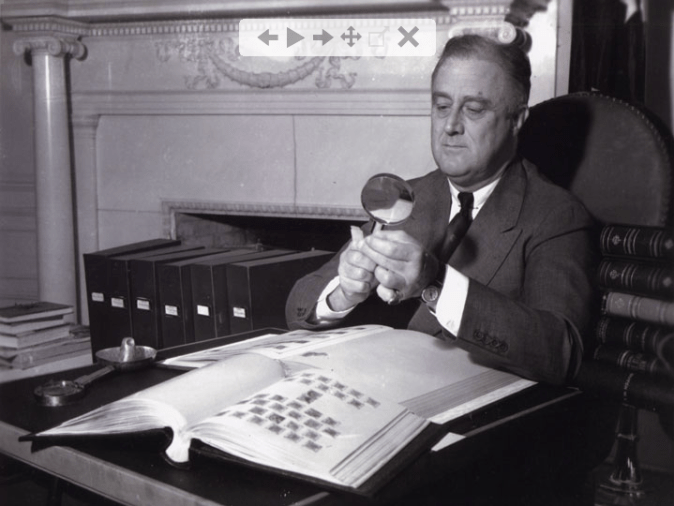
 (From the Franklin D. Roosevelt Presidential Library and Museum)

FDR, the consummate philatelist. (From the Franklin D. Roosevelt Presidential Library and Museum)

Of course, farmers were especially hard-hit during this era. They were notoriously independent people, however, often building their own homes, barns and furniture. All these tinkerers and self-taught builders needed tools, making some companies winners during the Depression. The newly created Craftsman Tool Company was able to gain momentum by offering different quality tools based on a tiered system (“Craftsman Vanadium” tools were made with alloyed steel, which was highly prized at the time, but there were three lines that varied in price, so tools were more affordable for folks without much to spare). Craftsman also was early to create tools for automobile owners when the automotive boom was in its infancy, and lord knows there was a whole lot of car tinkering happening at the time. I think every movie I’ve seen that takes place during this era involves a smoking engine and men with grayed t-shirts, wrenches and cigarettes clambering away.

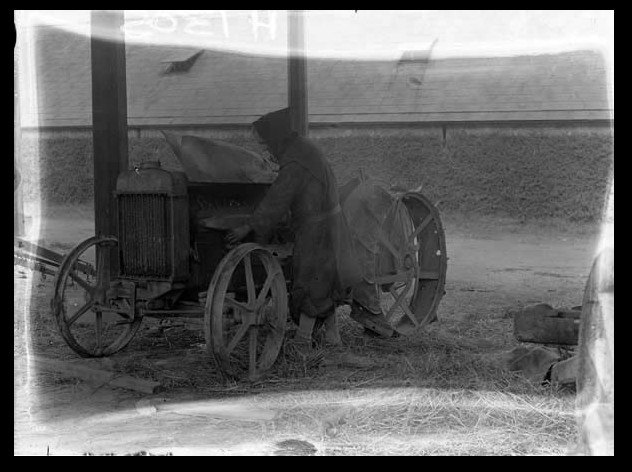
Even monks needed tools for tinkering. Check out this guy mending a tractor at St. Joseph's Monastery, Roscrea, Co. Tipperary, 1930. (Flickr Commons)

Even monks needed tools for tinkering. Check out this guy mending a tractor at St. Joseph’s Monastery, Roscrea, Co. Tipperary, 1930. (Flickr Commons)

While not necessarily considered as useful and productive as hobbies, board games also gained popularity as a way to pass the time, and Scrabble, Anagrams, and Sorry!, among others, were released or invented in the 1930s. While they didn’t necessarily teach overtly applicable job skills, some games did have an educational and economic component to them. I dug a little into the history Monopoly because it just seemed like it would be attached to some smarmy controversy, and boy, it delivered.

It turns out Monopoly was originally called “The Landlords Game,” and was created by Elizabeth Magie and patented in 1904 as a “practical demonstration of the present system of land-grabbing with all its usual outcomes and consequences.” Magie based the game on the economic principles of Georgism, a system proposed by Henry George based on the idea that people should own what they create, but that everything found in nature, most importantly the value of land,  belongs equally to all humanity. Magie designed the game with the purpose of demonstrating how rents enrich property owners and impoverish tenants.

The Landlord's Game, a game promoting social and economic justice that was ripped of by Parker Brothers in the 1930s and turned into a game of (fun) greedy land grabs. Monopoly has remained popular ever since.

Gaming also was especially popular during the economic downturn, though some argued that it wasn’t as industrious. The Landlord’s Game, a game promoting social and economic justice that was ripped of by Parker Brothers in the 1930s and turned into a game of (fun) greedy land grabs. Monopoly has remained popular ever since.

The game board was incredibly popular in Ivy League schools in the 1920s and 30s and used as a learning tool. Students would create their own boards and name them according to their own cities. There was supposedly pride in the fact that the game was largely replicated in this homemade way as it did not promote the wealth of any big, bad company. Yes, you see where this is all going. It is unclear how Charles Darrow was able to obtain a patent for this game, as its history was easily traceable back to The Landlord’s Game, but nevertheless, he secured one in 1933, called it Monopoly, and effectively made Parker Brothers a major company from the profits. Things were a bit…altered, however. For example in the place of Monopoly’s “Go!” was original a box marked “Labor Upon Mother Earth Produces Wages.”
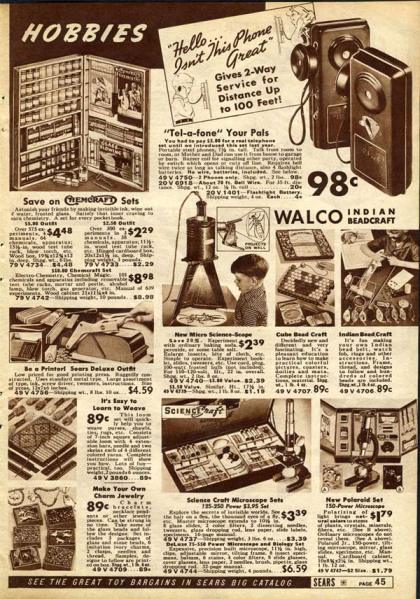
1930s Sears Roebuck ad for hobby equipment. Dreamy.

1930s Sears Roebuck ad for hobby equipment. Holy crap I want that microscope set.

The mid-1930s was also brimming with model building, especially model airplanes. Likely as an opportunity to actually have some positive stories to spin, media outlets were all over stories of model building due to the enthusiasm surrounding aviation at the time, and even started on-air model clubs, broadcasting to rural areas that didn’t have any groups nearby. A radio show called “The Jimmie Allen Club” featured actors like Mickey Rooney and Shirley Temple having aviation adventures. Municipalities and department stores offered classes in model building techniques as well.

Skelly Oil sponsored the Jimmie Allen Flying Club membership offer, circa 1933. Building models was huge during this period--tiny future airplane assemblers were being created everywhere!

Skelly Oil sponsored the Jimmie Allen Flying Club membership offer, circa 1933. Building models was huge during this period–tiny future airplane assemblers were being created everywhere!

Over the past decade, sites like Etsy.com have created a more concentrated marketplace for a growing number of hobbyists who want to make some cash on the side and for some, these hobbies turn into full time careers. The site does almost a billion dollars a year in annual transactions, and just the other day, WBEZ had a story about how Rockford, Illinois is trying to revive itself using an “Etsy economy.” Of course, a year previously there was controversy that Etsy was allowing sellers to outsource the work because they couldn’t keep up with the demand, which many argue changed the flavor of those homegrown greens (if you will). This blurring of the line between hobbies and work has recently been manifesting in a major way through craft brewing-gone-professional, and as self-taught woodworkers making furniture sell it at high prices in local retail stores. Lots of folks are quitting their day jobs, and I think it’s safe to say that with a few exceptions, most folks really want to leave their cubical to grow some vegetables or forge a knife, even if it’s just on the weekends, and even if they don’t get paid to do so. Maybe it’s just a matter of learning to trust in our creativity again as adults.

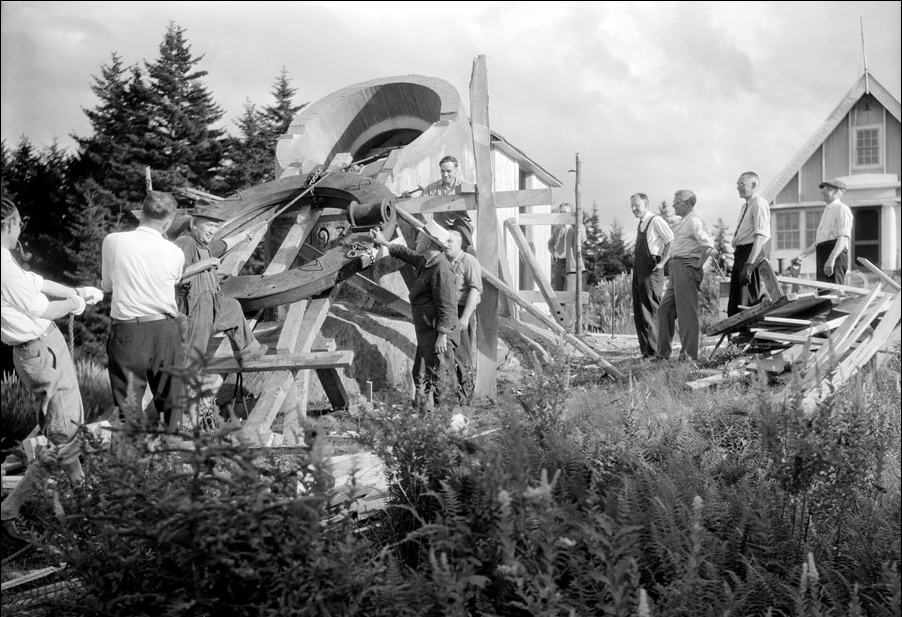
Amateur astronomer hobbyists made some unbelievably ambitious telescopes. This shows the construction of the Porter Turret telescope prior to the 1930 Stellafane convention, which attracted just under one hundred registered guests.

Amateur astronomer hobbyists made some unbelievably ambitious telescopes. This shows the construction of the Porter Turret telescope prior to the 1930 Stellafane convention, which attracted just under one hundred registered guests.

So, hobby on. You may just be able pay off those grad school loans and go to exotic places on a whim when your uniquely crafted Day of the Dead paper mache sculptures really take off. You know, for example. It’s gonna happen, damnit.

My friend Catherine riding her bike. Paper mache hobby experiment #3. Nailed it.

My friend Catherine riding her bike. January paper mache hobby experiment #3. Nailed it.

For more information on how folks stayed busy during the 1930s, check out “The Great Depression in America: A Cultural Encyclopedia, Volume 1,” by William H. Young and Nancy K. Young (you can find it on Google Books)

Some background on The Landlord’s Game:

http://lvtfan.typepad.com/lvtfans_blog/monopoly-and-the-landlords-game/

The WBEZ “The Etsy Economy” story:

http://storify.com/WBEZ/morning-shift-rockford-getting-a-boost-from-an-est

The plight of the farmer in the 1930s:

http://www.farmcollector.com/farm-life/u-s-farmers-during-great-depression.aspx

For more on the Amateur Astronomers’ Association of Pittsburgh, Pennsylvania and their journey to the 1930 Stellafane convention:

https://sites.tetratech.com/projects/103-RCPTResources/default.aspx

How to beat nature deficit disorder if you’re a city-dwelling ecologist with power tools

Jenny escaping the city to regain her sanity at the cabin she built in Wisconsin. (photo: Tona Williams)

Jenny escaping the city–and humans–to regain her sanity at the cabin she built in Wisconsin. (Photo: Tona Williams)

This month, Jenny Carney is building a Scandinavian cabin in her Chicago West Loop office. Why? Because nobody could tell her not to and because she wanted to feel closer to nature in a city of almost 3 million people. This does not surprise me as I’ve only known Jenny for a couple of years and she’s already convinced me to:

  • dig up a garden for her amid the swarming of some terrible, horrible bugs
  • go on a weekend-long fly fishing trip
  • buy a timeshare for a yet-to-be-constructed yurt
  • build hotels for bees
  • round up about 1,000 used bricks to use as an outdoor patio floor for her property in Wisconsin (thank you to all who contributed–I will likely pester you for more)
  • take a bird watching class
  • hike through a state park after convincing me to also buy purple hiking boots
  • bike 35 miles up and down hills all day long in unrelenting rain to look at barns
  • pick her up a 10” Craftsman miter saw to help build this office cabin
  • …and then hand sand down all the walls of this office cabin
  • (as you might guess, this list is hardly exhaustive)
photo 4

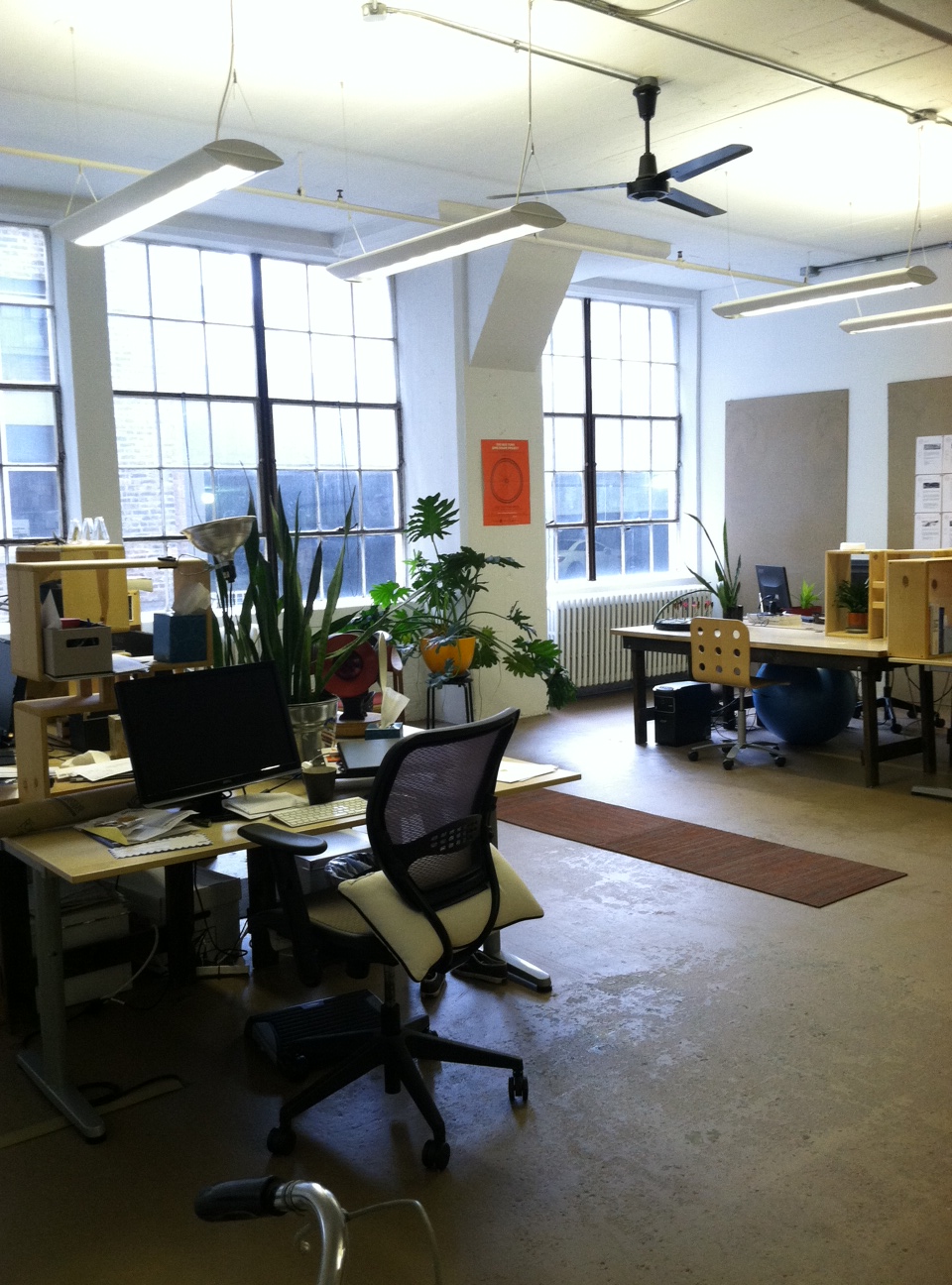
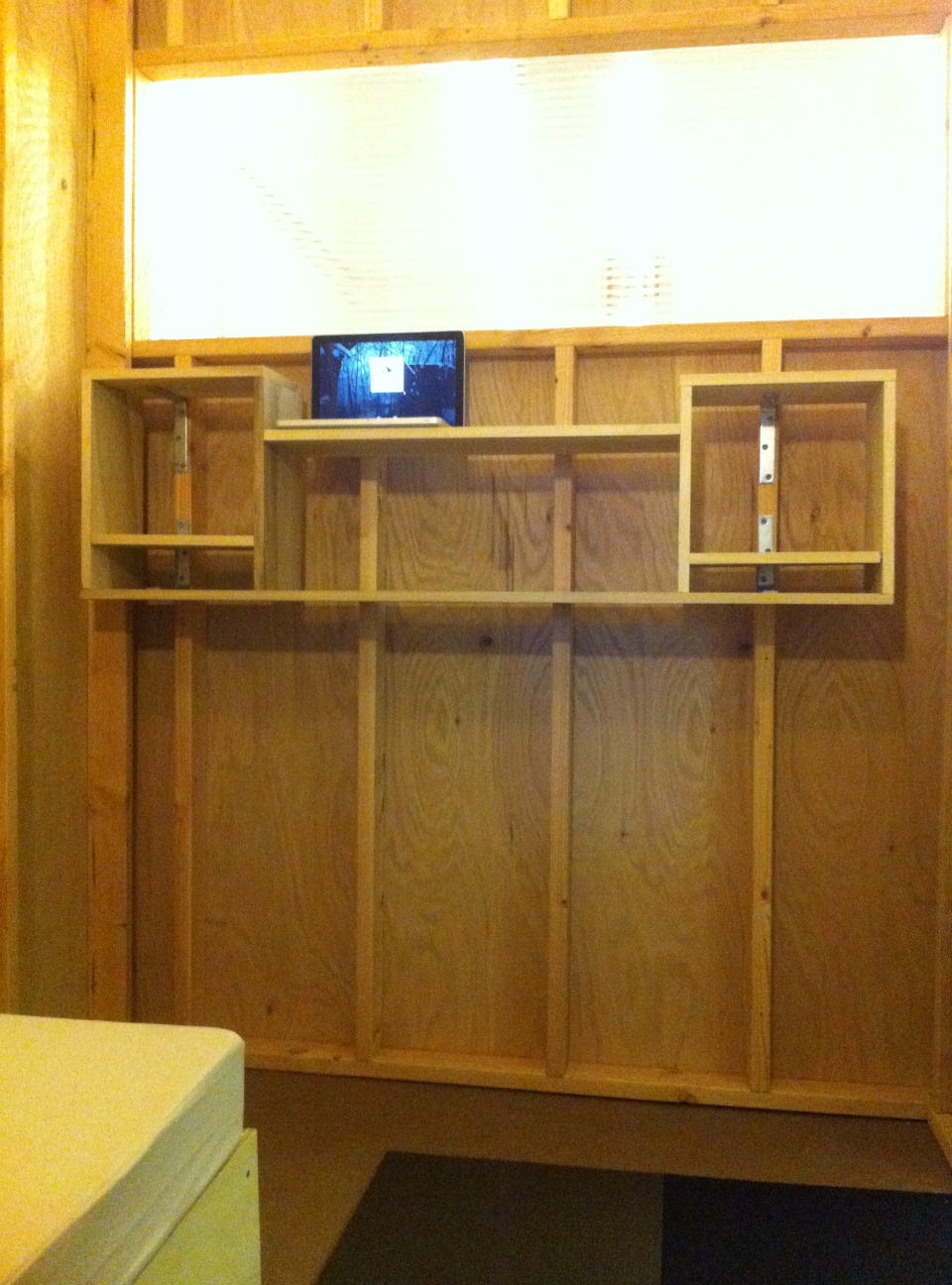
The Scandinavian cabin in progress. It’s tricky to get a good photo because of the giant mushroom column used to support this converted warehouse space, but you get the idea. The casement window is a reclaimed window she purchased at the Rebuilding Exchange.

Jenny built the desks and other storage items in the office and brought in a lot of her own furnishings for the space.

Jenny built the desks and other storage items in the office and brought in a lot of her own furnishings for the space.


She also introduced me to a phenomenon called “nature deficit disorder” when she lent me a book called Last Child in the Woods by Richard Louv last year, which I’ve managed to not return because it completely floored me and because I’m lousy that way. Nature deficit disorder is not an official medical condition, but it takes about five seconds to realize that it should be. In a nut shell, the book discusses the alarming rate of sickness, stress, aggressiveness, and obesity with kids in the U.S. and attributes this, in large part, to the fact that they are spending almost zero time running around outside. This was later confirmed when I worked on a project interviewing folks who work in and with our local forest preserves and who talked at length about how astonishingly disconnected kids are from nature. For example, some high schoolers believe there are lions and tigers living in the trees, and the majority were completely terrified of our woods in general, which don’t exactly emulate the enchanted forest of Brothers Grimm fairytales. Adults may be slightly less intimidated by nature (and I stress might, as I know some who would crumple if they didn’t have heated leather seats to lounge on while resting), but you can add heart disease, stroke, Type 2 diabetes, certain kinds of cancer, and no doubt depression to that list of health concerns related to a lack of exercise and frolicking about.

Cutting down wood on the weekend to create furniture for the inside of the office cabin.

Cutting down wood on the weekend to create furniture for the inside of the office cabin.

Anyway, Jenny figured all this out much earlier than I did. She grew up in rural Wisconsin and was/is an ecologist. She’s in love with systems, processes, data analysis, hypothesizing, and being outside away from people. Working as a field ecologist, she says, required more ingenuity, physicality, wits, and schooling than any other job she’s had.

photo 3

Seating for the office cabin, which has built in storage underneath and which was precisely calculated to ensure that it was long enough to allow for daytime work naps for its designer, naturally.

A "standing desk" she designed and built according to the varied heights of herself and her employees.

A “standing desk” she designed and built according to the varied heights of herself and her employees.


She eventually stumbled into green building, which provided an intriguing opportunity that put her at an intersection between environmental science, business, development, society, urban planning, and a number of other related fields. Dealing with the built environment was inviting because it is more tangible in a certain sense, than working as an ecologist documenting the natural world in decline. This career shift ultimately lead her to Chicago in 2007, where she opened up a Midwestern branch for an environmental consulting business.

Some essentials on the land.

Some essentials on the land: Thomas Jefferson study materials and a cordless power drill (no ma’am, no electricity).

The Carney maple syrup factory. Jenny's dad is a retired construction foreman and helped with the construction of Xanadu.

The Carney maple syrup factory. Jenny’s dad, a retired construction foreman, passed on his intense love of chores and also helped with the construction of Xanadu.


But, alas, the hustle and bustle of the city isn’t always ideal for someone who likes to think about the mating habits of bugs and who can explain how and why the breeze is blowing, so pretty much on a whim, she purchased several acres in the Driftless Area of Wisconsin in 2009 and named the land “Xanadu.” This was obviously cheaper than buying land in the city, and it was beautiful, geologically unique, and a reasonable enough distance from Chicago that weekend visits were feasible. She needed some shelter, however, so over a long weekend she constructed a 150 SF shed and an outhouse with a composting toilet with her dad, who is a retired construction foreman. Jenny was the designer, financier, and unskilled labor. He was the skilled labor with engineering prowess. She also described him as “exceedingly crafty,” which I believe, as he has constructed some kind of steampunk manifestation of a maple syrup factory according to pictures I’ve seen, along with an entire house that he continually builds more and more outbuildings around to stay busy since retiring. Jenny felt this project would be a welcome diversion for him.

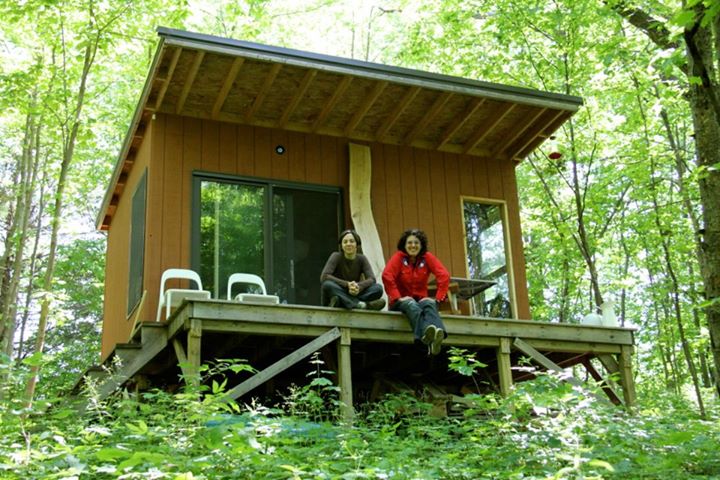
Xanadu, post-paint job, furniture and rain barrel installation. It's ever a work in progress.

Xanadu, post-paint job, furniture and rain barrel installation. It’s ever a work in progress. (Photo: Tona Williams)

To build the shed at Xanadu, Jenny used a chop saw, skill saw, power drills, a pneumatic nail gun, an assortment of hammers, and that healthy love of chores that hearty Wisconsinites are prone to have. I’ve also been put to work with shovels and a chain saw, which I apparently became too aggressive with. Sorry, trees. Somewhere along the line she lost her miter saw, which is why I was happy to be able to hook her up with a Craftsman miter saw, as well as an attractive, shiny hatchet for good measure to chop branches at Xanadu for the cast iron stove that heats us. And heats us remarkably well, I might add.

Photo by Tona Williams.

Photo by Tona Williams.

Basically, if you’re ever lucky enough to visit, expect to earn your stay there—Jenny doesn’t screw around and there is always work that can be done. Until it’s time for whiskey and/or poetry, anyway. There are also added perks of mooing cows off in the distance at night, Carney family homemade maple syrup, and (new!) black walnuts meticulously cracked and jarred for consumption, and the fact that you will get to hear stories about how trees are incredibly smart and why fireflies blink. Believe me, if I could rent Jenny and her cabin out to my fellow nature-deprived city-dwelling friends, I would. Until then, I would recommend looking up some plans online and adding “build a cabin” to your 2014 To Do List. It’ll feel like entering Dr. Who’s magical phone booth.

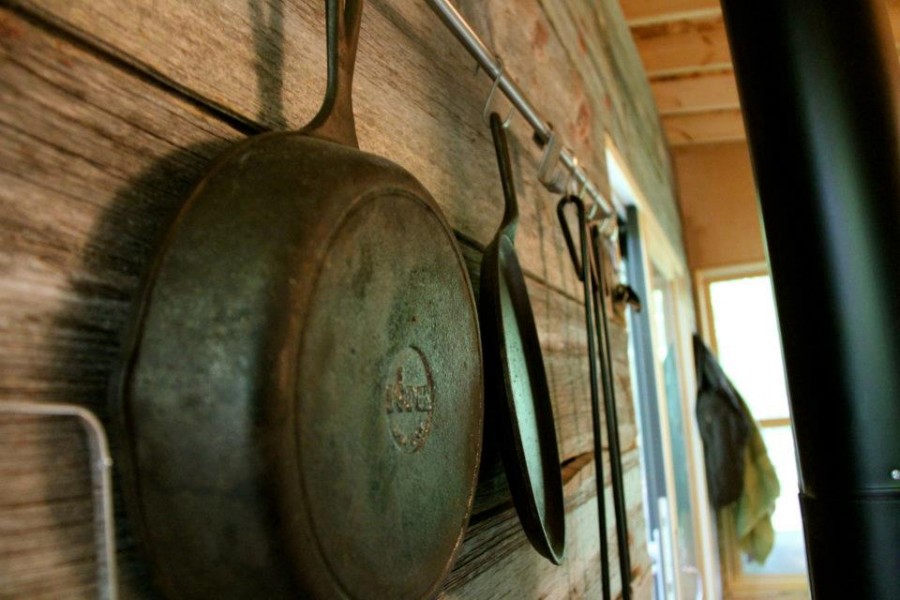
Coffee heating on the cast iron stove, reading on the porch. (Photo by Tona Williams)

Coffee heating on the cast iron stove, reading on the porch. (Photo by Tona Williams)

Xanadu (inside). The cabin is tiny, but once again, Jenny designed multi-purpose furniture. The opposite side of the space has two stacked wooden boxes store bedding and come apart to form beds, and a frame drops down from a wall to create a third, full-sized bed. We've slept 4 in here and been a-ok. I know. Swoon! (Photo by Tona Williams)

Xanadu (inside). The cabin is tiny, but once again, Jenny designed multi-purpose furniture. The opposite side of the space has two stacked wooden boxes store bedding and come apart to form beds, and a frame drops down from a wall to create a third, full-sized bed. We’ve slept 4 in here and been a-ok. I know. Swoon! (Photo by Tona Williams)

More than a leg to stand on: Hands-on fields that combine art, science, and even a little fiction

A leg up.

A leg up! Plaster molds are created from patient casts. The positive is then used as the model to mold and fit an orthotic device.

I recently completed a 10-day road trip around the South that included Illinois, Tennessee, Alabama, Mississippi, and Louisiana. This little adventure, which has become an annual event that restores my sanity, generally involves many cemetery stops, crumbling shacks worth pulling off the road to gaze at, amazing little restaurants and bars (oh, cheesy grits and Sazeracs, you have obliterated me with your love), some kayaking in the bayou, and lord knows a million other delightful events. I’m excited to report that for the first time ever, this particular trip also included an interview with some orthotics and prosthetics makers in New Orleans who just happened to be one of the winners of ToolMade’s Sears-Craftsman Tool Giveaway.

Clare shows a custom solid ankle-foot orthoses she fabricated using a vacuum form technique at the clinic.

Clare shows a custom solid ankle-foot orthoses she fabricated at the clinic.

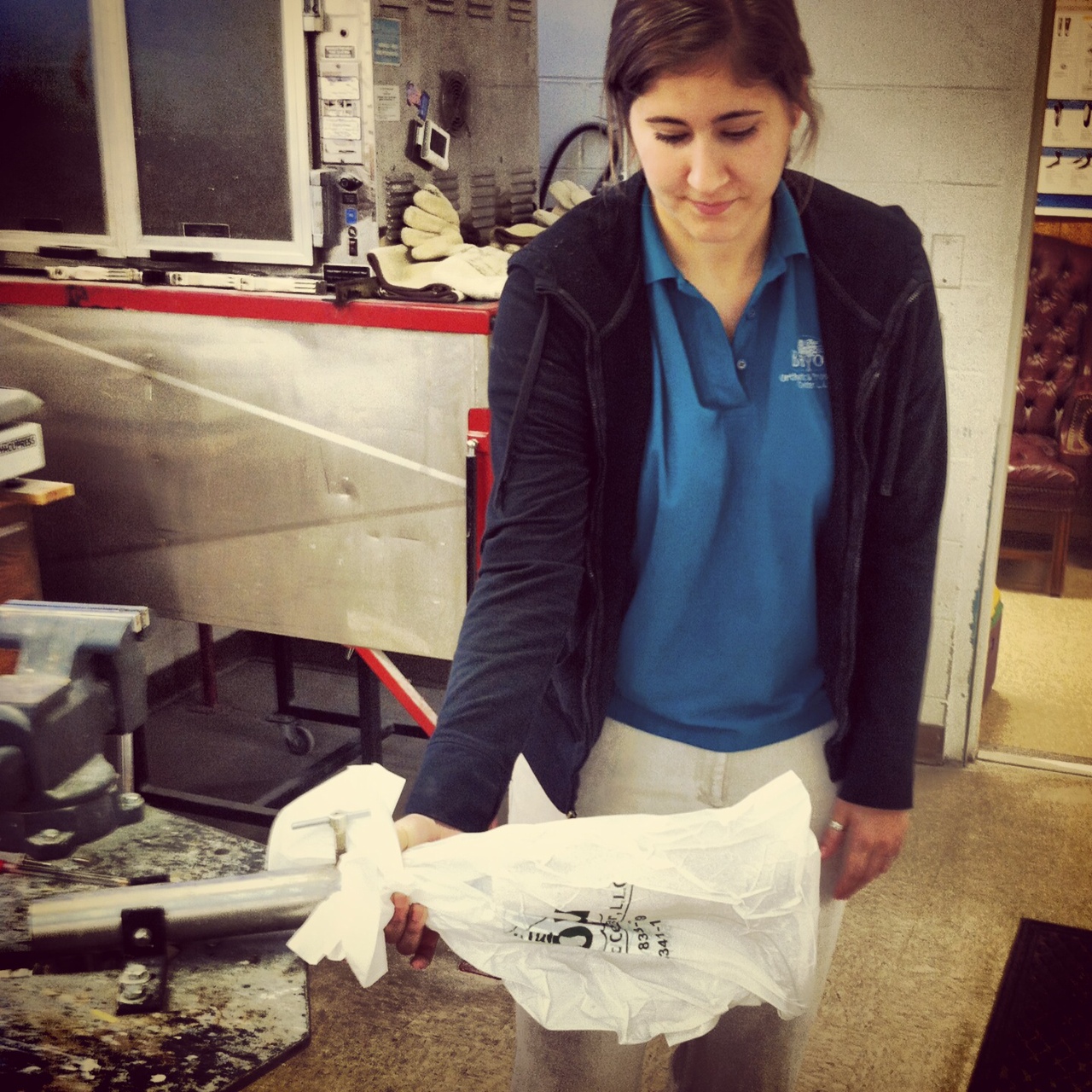
After a plaster cast is made for a client, a plastic sheet is vacuum formed for an exact fit. Because plastics are now used, a heat gun can make tiny adjustments when needed. Yes, that's a bag. No, that's not what Clare usually uses.

After a plaster cast is specially made for a client, a plastic sheet is vacuum formed for an exact fit. Because plastics are now used, a heat gun can make tiny adjustments when needed as well. Yes, that’s a bag. No, that’s not what Clare usually uses.

Prostheses are damned fascinating to me and I’m telling you, they should be to you as well. In my early 20s, I had some unexpected health issues that almost made me lose one of my precious gams, so when things were scary, I made a point of researching some heroes with prosthetic limbs to try and keep a positive attitude–it’s crazy what people can do despite their perceived handicaps. I get that this is a specific experience that initially lead to my interest, but you don’t have to dig far to find something that will blow your mind–I mean, some of the earliest and also most recent innovations read like science fiction. Designers from a wide range of backgrounds are getting better and better at creating limb stabilization and replacement devices due to new technologies, tools, and materials, and that’s excellent news considering that there are nearly 2 million people with artificial limbs in the U.S. (about 185,000 amputations in the U.S. alone each year, and that number is climbing).

I'm not sure how well this picture illustrates this, but if you look closely, you can even see the grooves of the skin on the foot. The accuracy matters not only to the fit but to how realistic a device can be made to look for the client.

I’m not sure how well this picture illustrates this, but if you look closely, you can even see the grooves of the skin on the foot.

Prostheses! It is imparitive that these fit exactly, and sometimes multiple devices will have to be created just for the fitting process. The plastic is thermoset plastic, which starts as a liquid and is impregnated with fabric. The inside is made of carbon fiber for added strength.

Prostheses! Different heights and body types sometimes require multiple devices to be created just for the fitting process. The plastic is thermoset plastic, which starts as a liquid and is impregnated with fabric. The inside is made of carbon fiber for added strength.

When I had an opportunity to interview Clare Wiegand and Paul Beaudette at the Bayou Orthotics and Prosthetics Center in Metarie, Louisiana, I jumped at the chance. Yeah sure, you can run with that pun. First, some definitions to distinguish these devices/fields:

Orthosis (orthotic device): “An externally applied device used to modify the structural and functional characteristics of the neuromuscular and skeletal system,” or basically, something bracing what is already there.

Prosthesis (prosthetic device): “An artificial device that replaces a missing body part lost through trauma, disease, or congenital conditions.”

An orthotist fabricates and fits custom-designed external orthopedic braces, and a prosthetist creates, designs, and custom-fits artificial limbs. Both require a lot of time evaluating and following-up with patients as well.

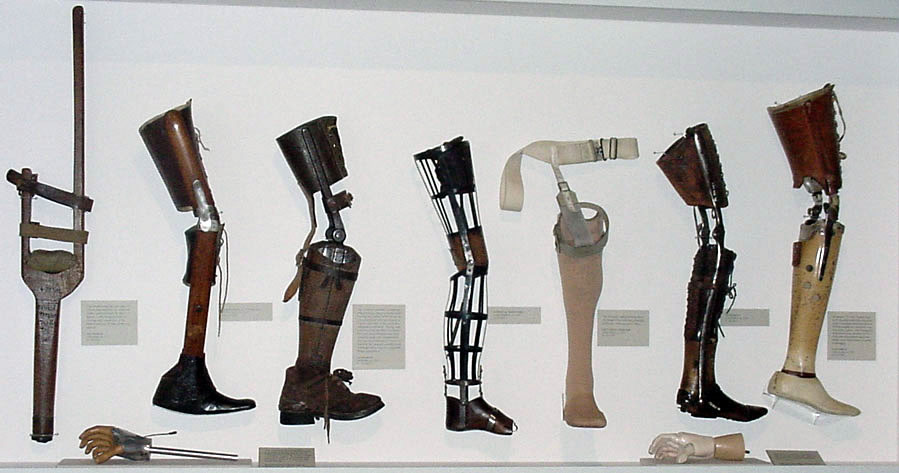
A brief history of legs past.

A brief history of legs past.

As one might guess, splints and braces were the first orthotic devices (also called orthoses). With the Civil War came a desperate need for massive quantities of prosthetic limbs (prostheses) and those experimenting with the creation and attachment of limb replacements became recognized as legitimate health professionals at that time–before this period, people had to fashion them from pieces of wood by themselves. These fields have grown and become increasingly sophisticated with every major war, and more recently have boomed due to lifestyle and health changes, including an ever-increasing aging population and a dramatic increase in diabetes, obesity, and heart disease.

J.E. Hangar Company, artificial leg production workshop, post Civil War. The company survives today! (National Photo Company Collection)

J.E. Hangar Company, artificial leg production workshop, post Civil War. This was serious technology at the time. Prostheses were made of whittled barrel staves and metal. The company survives today! (National Photo Company Collection)

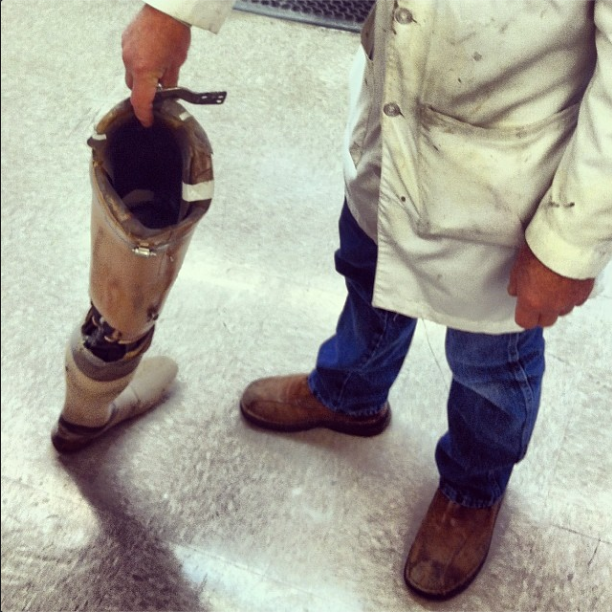
Paul, who has been making prostheses for decades, shows off a wooden leg that he keeps in the office as a reminder of days past.

Paul, who has been making prostheses for decades, shows off a wooden leg that he keeps in the office as a reminder of days past.

Clare, who has been making both orthoses and prostheses since 2007, was my contact at the clinic, so I asked her what tools would be useful. They use lots of drills, drill bits, heat guns, belt sanders, pliers and torque and allen wrenches. I picked her up a variety of Craftsman tools within the contest budget, consisting of:

  • (2) 4 piece Pliers Sets (diagonal, slip joint, arc joint, long reach long nose, wide jaw, duckbill, linesman, and regular long nose)
  • 21 Piece Titanium Coated Drill Bit Set
  • 17 Piece Screwdriver Set
  • 19.2-Volt C# Cordless Drill/Driver
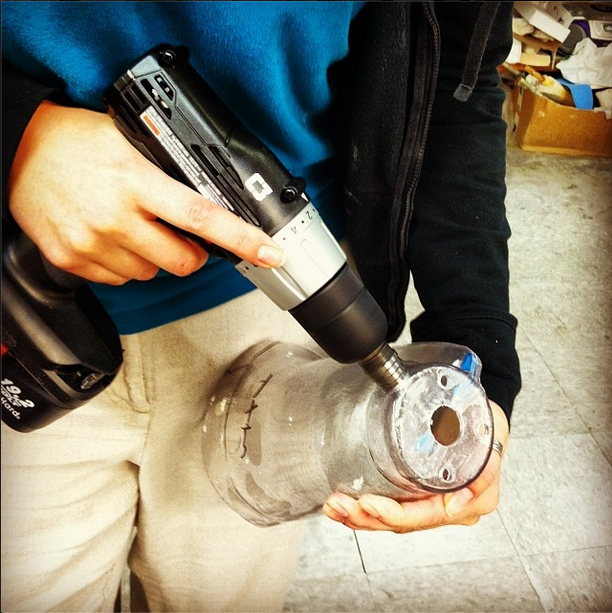
Drills are used often and need bits that can drill through carbon fiber. Step bits are often used to create wider openings.

Drills are used often and need a wide range of bits, including step bits for wider sockets.

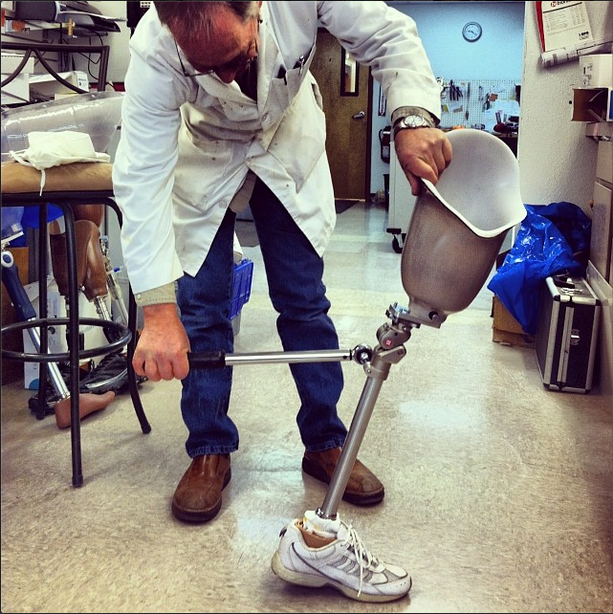
Adjustments are crucial. There are wrenches and pliers galore around this place.

Adjustments are crucial. There are wrenches and pliers galore around this place.

I was toured through the different stations for an overview of how knee, ankle and foot devices were created, and given a look at what some of the older models looked like. The tool stock used for making these devices has changed quite a bit in recent decades—Paul, who has been making prostheses for over 40 years, explained how wooden prostheses used to be made entirely out of hand tools—sharp chisels which would be pulled upward to shape a leg are now replaced by routers, for example. The materials are also very different and consist of things like carbon fiber and plastics, making them much easier to adjust for a precise fit for each patient. Of course, the patients have also changed over time due to both an increase in illnesses as described above, but also due to fewer industrial accidents—at least some people seem to be paying attention to OSHA?

USA's paralympic swimmer Jessica Long. (Press Association via AP)

USA’s paralympic swimmer Jessica Long. (Press Association via AP)

If you’re not sure what to do with your time on this planet and this topic is at all interesting to you, seriously consider looking into these fields, which are described good career options for those who want to be an artist/bio-mechanist/engineer/medical practitioner. Why limit yourself, right? I would also add that folks who care about others and are interested in hands-on work and tools could certainly find a niche here. There is a projected 25% increase in the number of people needing orthopedic braces due to paralysis, deformity or orthopedic impairments by 2020. And if you’re more interested in creating prostheses than orthoses, that need is expected to grow 47% in the same timeframe. Wow. Yeah, I’m really selling it. Because it’s so damned important.

What my prosthetic limb would look like (painted by Tim Beck).

What my prosthetic limb would look like (painted by Tim Beck).

For more info on innovations in the field and ways people are advancing mobility, check out some great links here:

Targeted muscle reinnervation (TMR):  Your brain controls the muscles in your limbs by sending electrical commands down the spinal cord and then through peripheral nerves to the muscles. http://science.howstuffworks.com/prosthetic-limb5.htm

Photos of the latest in prosthetic limb technology: http://www.smartplanet.com/photos/the-latest-in-prosthetic-limb-technology-photos/

Stand-up Mobilization Device (this is a bit of an offshoot, but a mind opener): http://www.wimp.com/newdevice/

More about careers in these fields (includes a list of programs throughout the country towards the end of the brochure): http://www.opcareers.org/assets/pdf/Turnkey_Brochure.pdf

Make it art: http://www.thealternativelimbproject.com

In case there was any doubt about whether prostheses could be sexy. Jo-Jo Cranfield wearing the snake arm created by Sophie de Oliveira. Please check out the Alternative Limb Project when you have a few minutes.

…and just in case there was any doubt about whether prostheses could be sexy. Jo-Jo Cranfield wearing the snake arm created by Sophie de Oliveira. Please check out the Alternative Limb Project when you have a few minutes. http://www.thealternativelimbproject.com

Screen Shot 2014-01-21 at 3.18.48 PM

If the shoe fits, wear it. Or better yet, make your own.

A year and a half ago, I found myself talking to a guy on the beach during the 4th of July who pointed to his shoes and said “I made these.” All I could say was “whoa” and “where.” I couldn’t remember what this guy’s name was if you paid me, but you can bet I never forgot there was a shoemaking school nearby. There are possibly as many trades fading into obscurity as there are languages, and bringing attention to them and demystifying them even just a little is a big part of what gets this girl out of bed in the morning. Come back!!!

Shoes! Custom -fit and handmade in the workshop.

Shoes! Custom-fit and handmade in the workshop.

Enter: Sara McIntosh, a cobbler for 39 years, and the wonderful human who started the Chicago School of Shoemaking in 2011. After turning 60, she decided that she wanted to go beyond creating custom made shoes through her shoe shop, and that it was time to empower others by teaching them the trade. Sara is a self-taught cobbler who embraced the self-sufficiency lifestyle in the 1970s, which focused on sustainable living in the truest sense–by living with only what she could produce and not consuming outside goods. So basically, she needed a pair of shoes so she made herself a pair of shoes. I know, I want to be her, too.

Sarah McIntosh, founder of the Chicago School of Shoemaking and Master Cobbler. She even made the mallet!

Sara McIntosh, founder of the Chicago School of Shoemaking and Master Cobbler. She even made the mallet!

photo3

See? Sara’s Craftsman bandsaw is used to cut down a dowel that become the handle for a mallet and then rough cuts the mallet head as well. She also uses the bandsaw to shape the souls of the shoes.

Beyond the empowerment that comes from knowing that you can just make whatever you need (she has also built her own log homes, grown her own food, etc.) the freedom that comes with such a useful skillset has allowed Sara to live all over the U.S. and support herself and family wherever she has gone. Everyone needs shoes, and she is one of only a few people left in the country who custom makes them by hand from scratch.

The workshop.

The workshop.

There are a couple of different methods of fabricating shoes, and Sara developed her own based on the out-stitch technique, which lends itself to people who make shoes out of their home or in a small shop. There is a band saw in the back of the shop that is used for a variety of things, including rough trimming the souls of shoes and cutting down dowels that are made into mallet handles. Awls are used for marking lines in leather, metal squares help with patterns, pliers replace rivets and add studs, nippers can cut a chain or destroy a bad rivet…most tools are hand tools and it didn’t seem difficult to set up one’s own workshop once you knew what you were doing.

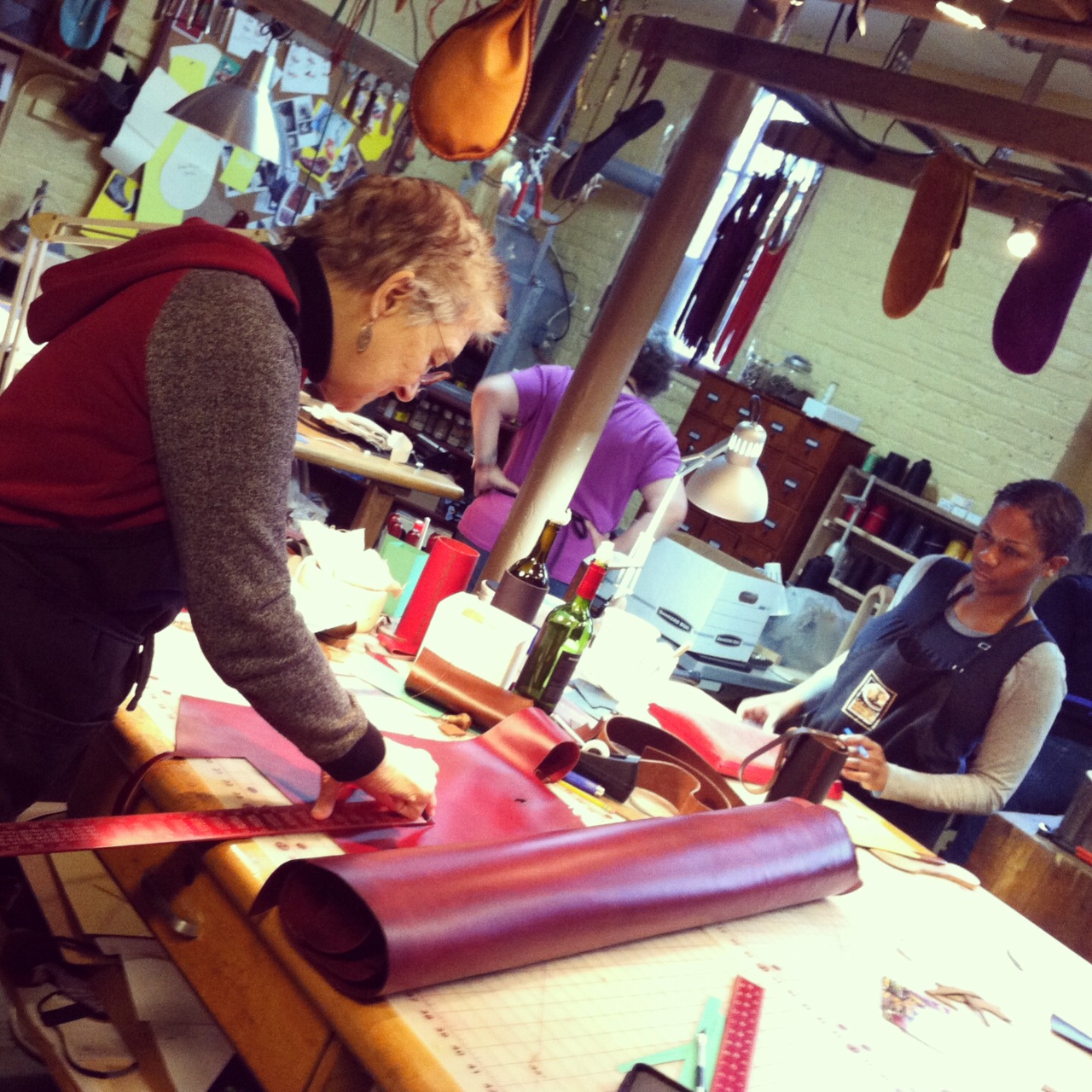
Sarah uses a square as an edge to pattern the leather.

Sara uses a square as an edge to pattern the leather. Keisha looks for guidance as she works on a leather tote.

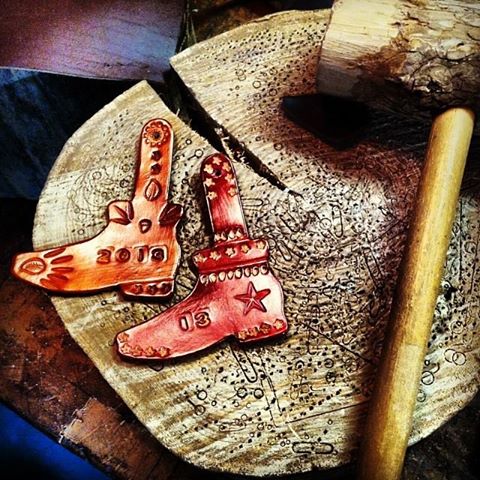
There are a variety of leatherwork and shoemaking classes at the school for both beginner and advanced students, and over 500 people have come from around the country to learn. I visited the workshop on a leatherworking day and made some ornaments by stamping, dying, and burnishing leather pieces. I can say with great sincerity that burnishing is now one of my favorite things in the world to do–I’d be arthritic within a year as my compulsive nature shined up every piece of leather on this here earth. Others in the workshop that day were making leather bags, a belt, a Kindle case (that would bring you to your knees, seriously), and a wallet, and folks also often make leashes, wine holders, purses, and anything else they can think of.

photo5

Pliers are used to replace rivets or add studs to leather.

Alas, ordering shoes from Sara will land you on a long waiting list, but embracing a sustainable/self-sufficient lifestyle will land you in some classes and enable you to teach yourself and never be wanting or lacking a creative outlet. Basically, it’s contagious and once you know you can make one beautiful, custom thing you have the confidence to make more. Check out the Chicago School of Shoemaking philosophy and classes here and glide around town in the best fitting custom kicks you’ll ever own.

My very, very, very well burnished ornaments. Happy holidays! Go build something.

My very, very, very well burnished ornaments. Happy holidays! Go build something.